
Last updated September 10, 2026
Full 25-point door and opener safety check with every visit - springs, cables, rollers, tracks, and your LiftMaster or Chamberlain opener included
You get a price before we start. It does not change when the truck arrives.
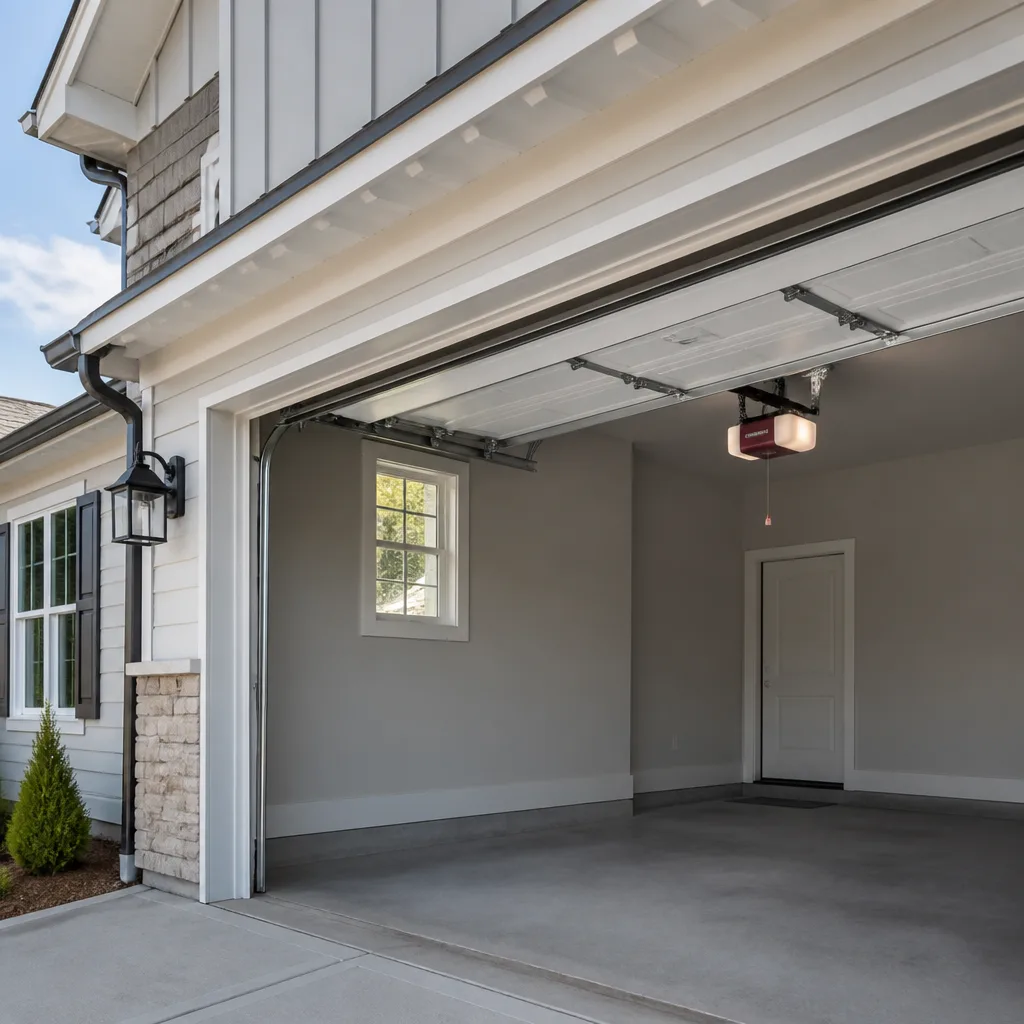
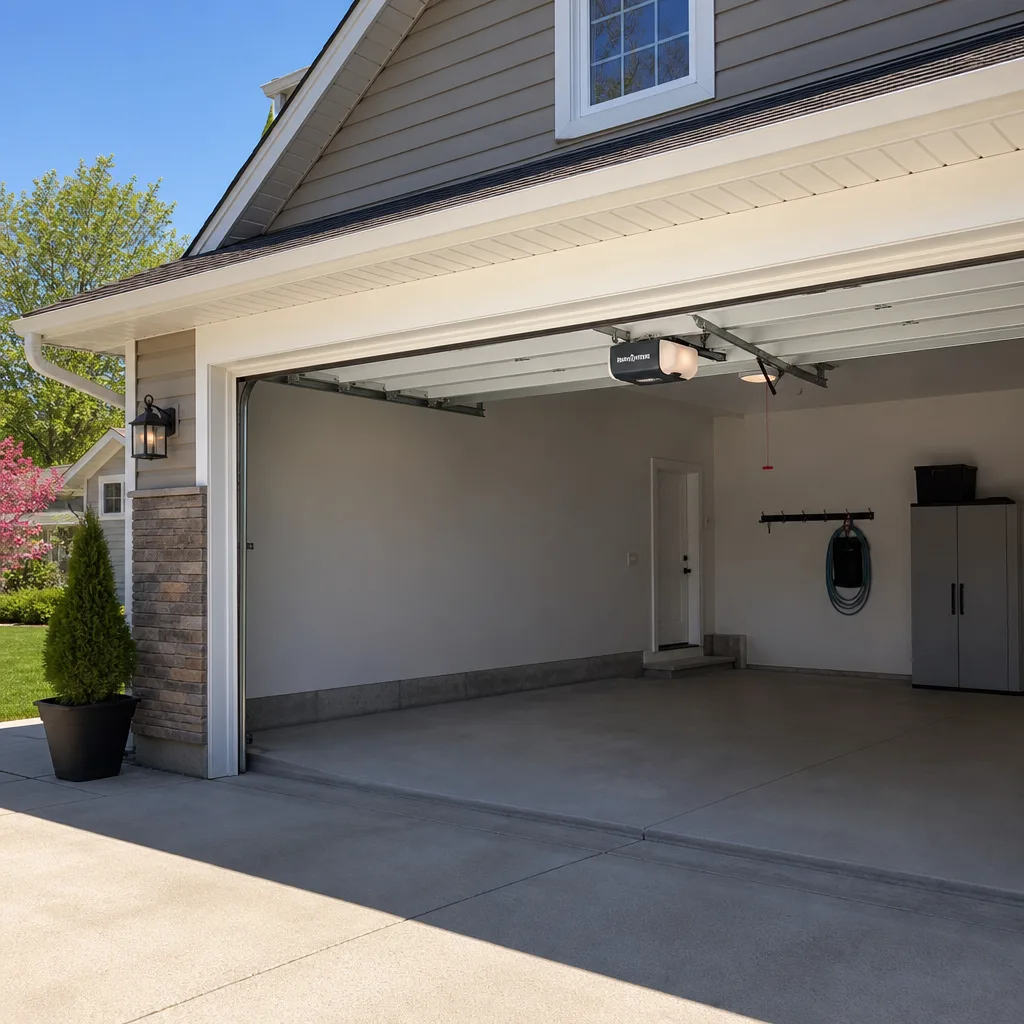
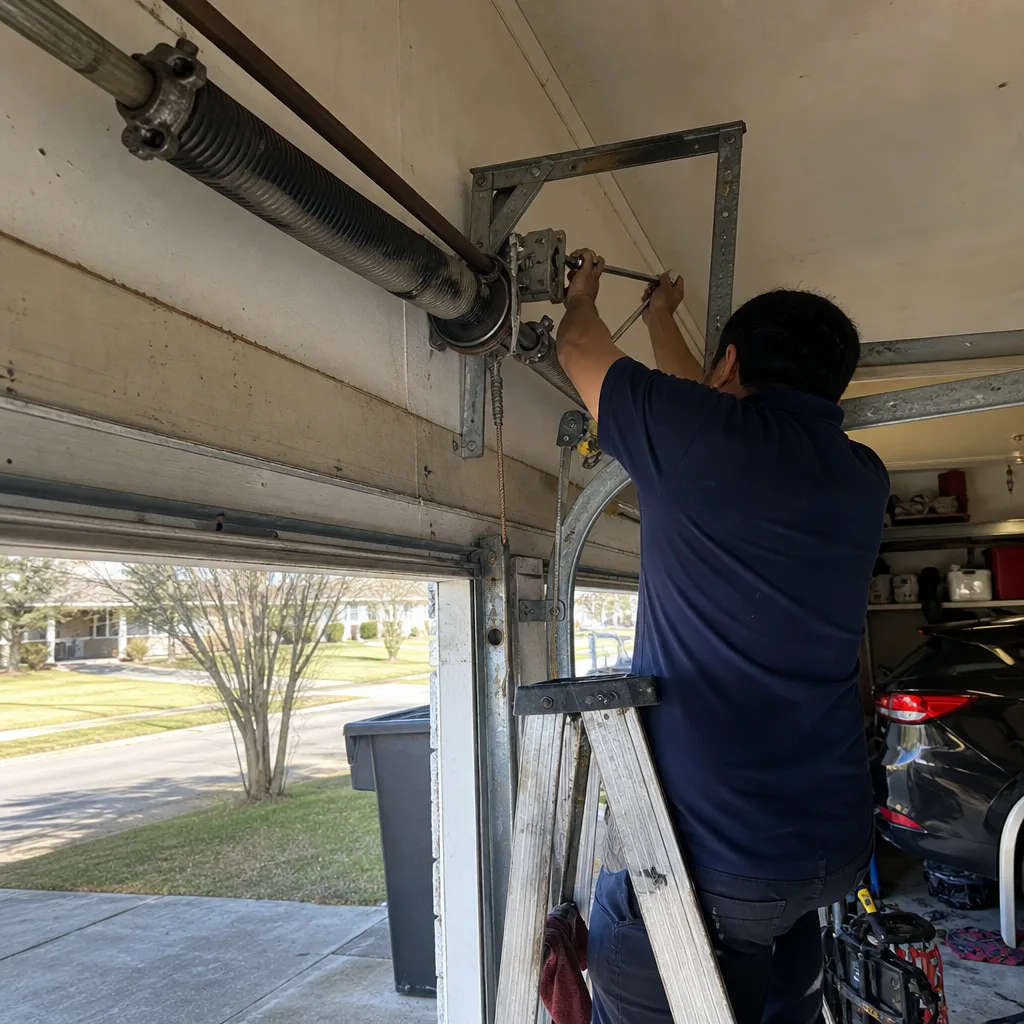 Before
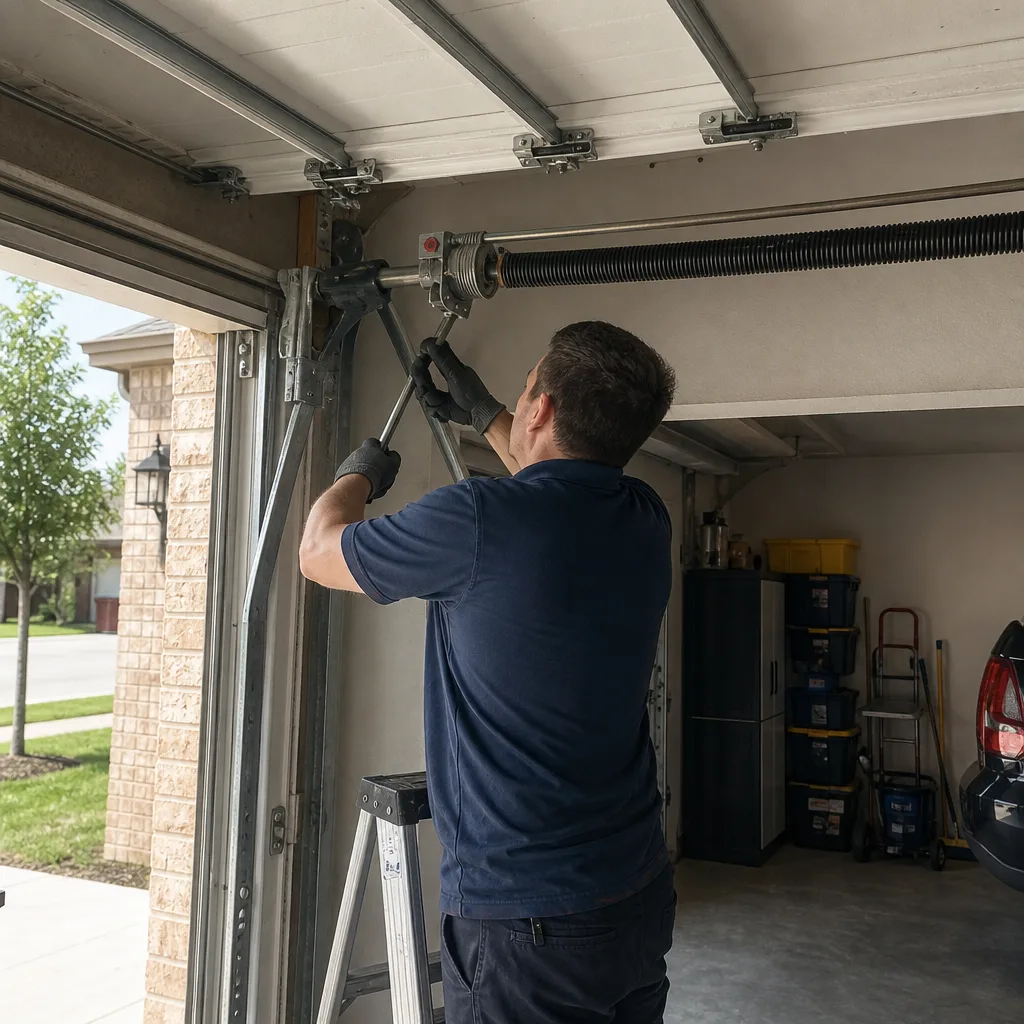 After
After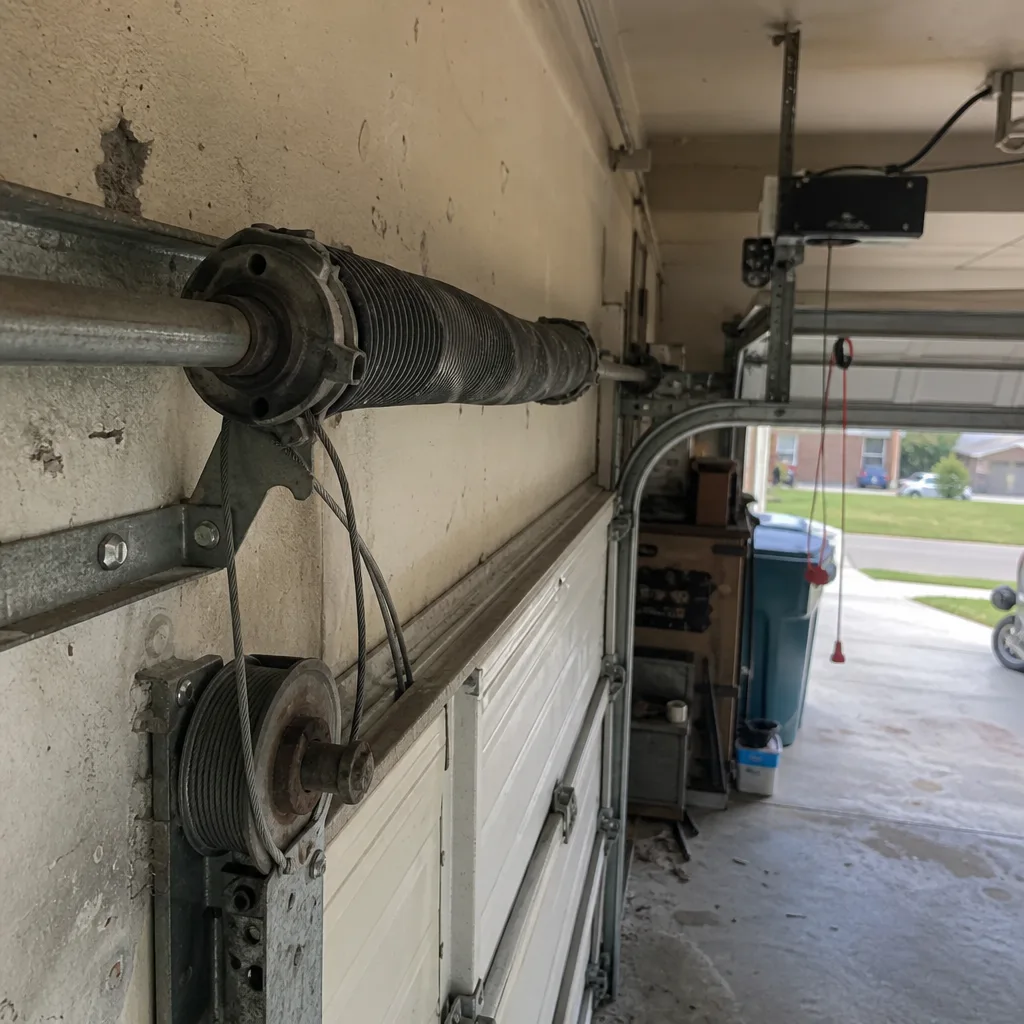 Before
 After
After Before
 After
AfterGarage Door Warning Signs: A Rosenberg Homeowner’s Reference Guide
A garage door that reverses for no visible reason isn’t malfunctioning randomly. It’s telling you one of five specific things, each with a different repair cost and urgency level. Homeowners in Rosenberg who know the difference save hundreds by not calling on a Saturday. This guide names every warning sign a garage door gives before it fails, explains the mechanical reason it appears, and tells you honestly whether it’s a watch-it or fix-it-now situation. For a broader look at maintenance and repairs, see our The Complete Guide to Garage Door in Rosenberg. We’ve spent 42 years reading these signs in Fort Bend County homes, from the historic districts near downtown Rosenberg to the newer builds in Canyon Gate at the Brazos.
Quick Answer
Garage doors always signal problems before they fail. The most critical warning signs are: a door that won’t stay open halfway (broken spring), a cable with visible broken strands (immediate replacement needed), grinding or popping during travel (track or roller failure), and any door that reverses without obstruction (safety sensor or force setting issue). Most of these conditions worsen within days, not weeks, in Rosenberg’s heat and humidity.
Table of Contents
- Visual Signs: Cables, Springs, and Hardware
- Sound Diagnosis: What Grinding, Popping, and Scraping Mean
- Movement, Speed, and the 30-Second Balance Test
- When the Opener Struggles: Why It’s Usually Not the Opener
- Gulf Coast Weather Damage: Rust, Seals, and Hinge Corrosion
- Reversal and Sensor Problems: The Five Causes
- Panel and Door Damage: Cosmetic vs. Structural
- Common Mistakes to Avoid
- When to Call a Professional
- Frequently Asked Questions
- The Bottom Line
Visual Signs: Cables, Springs, and Hardware
The most reliable warnings are the ones you can see. A garage door’s cables and springs carry enormous tension, and they show distress in specific, predictable patterns. Learning to read these patterns takes about five minutes and can prevent a door from crashing down or trapping a car.
Cable Conditions: Fraying vs. Broken Strands
This distinction matters because it separates a watch-it situation from a fix-it-now emergency.
Fraying looks like fuzzy, feathered fibers spreading outward from the cable’s surface. The steel strands underneath remain intact and aligned. Fraying indicates surface wear from rubbing against a pulley edge or drum flange. In Rosenberg’s humidity, frayed areas collect moisture and accelerate corrosion. We typically see this in homes near the Brazos River where airborne salt and moisture are higher. Fraying warrants a call within two weeks, but the door remains safe to operate carefully.
Broken strands appear as sharp, separated wires poking outward from the cable bundle, often with a visible gap where the strand has snapped completely. This is different from fraying. A single broken strand means the remaining strands are carrying overload. Two or more broken strands in one cable mean the cable could fail on the next cycle. We’ve responded to emergency calls in Rosenberg’s Pecan Grove and Greatwood neighborhoods where a cable with three broken strands finally let go, dropping a double-steel door onto a vehicle. The repair cost tripled because the sudden release damaged the bottom panel and bent a track section.
Run your hand along the cable length (with the door closed and opener disconnected) wearing a work glove. Fraying feels fuzzy. Broken strands feel like sharp bristles. If you find broken strands, stop using the door immediately.
Spring Warning Signs
Torsion springs sit above the door on a metal tube. Extension springs run parallel to the horizontal tracks on each side. Both types show failure patterns.
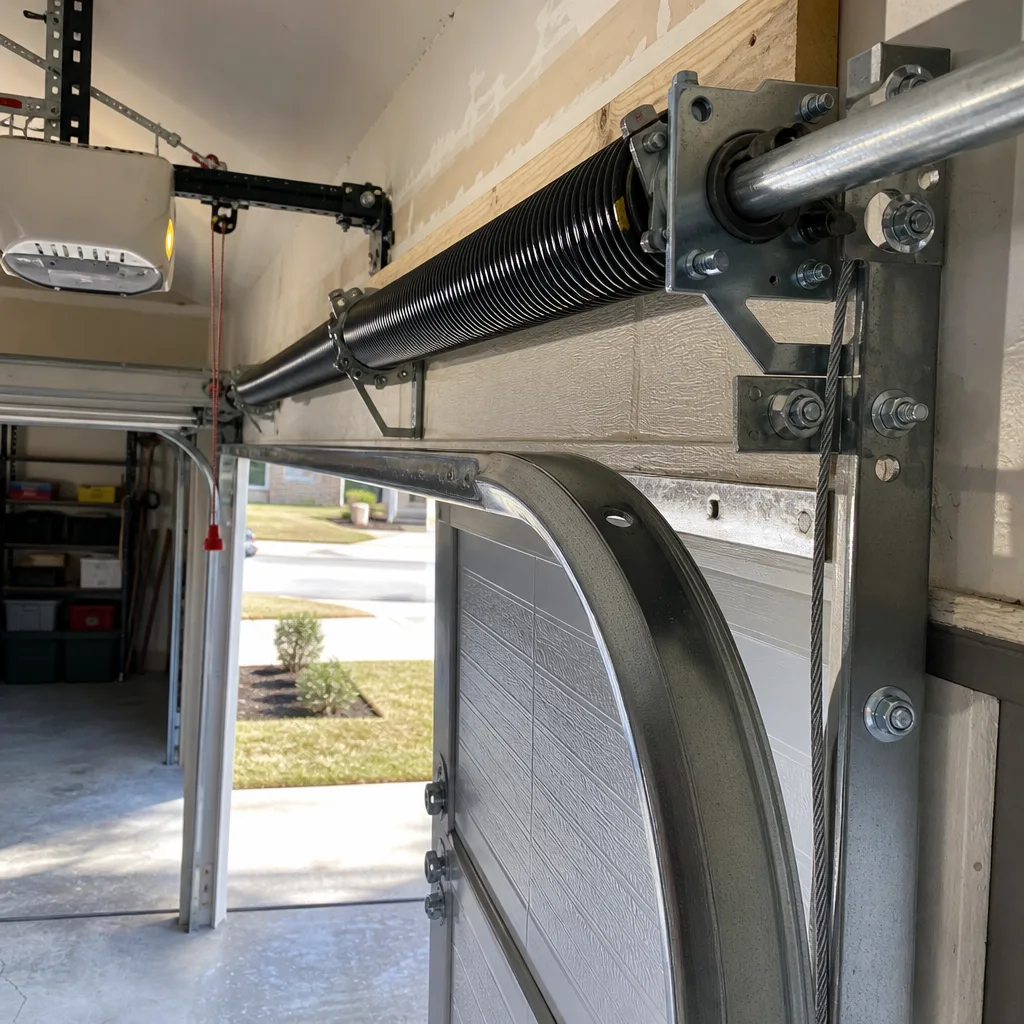
A torsion spring that’s failing develops a visible gap in its coils where the spring has separated and cannot fully compress. You may also see rust bleeding from the spring’s interior, or a pronounced squeak that lubrication won’t resolve. In Rosenberg, we see accelerated torsion spring fatigue from March through October when attic temperatures above the garage routinely exceed 130 degrees. The heat cycling weakens the steel. A gap of even one-quarter inch means the spring has lost significant tension. The door feels heavier, the opener strains, and the remaining spring (on a two-spring door) carries double load.
Extension springs show failure through stretched coils that no longer sit tight together, or through visible rust where the spring hooks attach to the pulley frame. The safety cable running through each extension spring should be taut. If it’s slack, the spring has stretched beyond specification.
Never attempt to adjust or replace a torsion spring. The stored energy can cause serious injury or death. This is not cautious language. We’ve seen experienced DIY homeowners hospitalized in Fort Bend County from spring releases. If you’re considering professional help, read How to Hire a Garage Door Contractor in Rosenberg: A Step-by-Step Guide to choose qualified service.
Hardware and Hinge Inspection
Check the roller stems where they enter the hinges. A shiny wear ring around the stem means the roller is wobbling in a worn hinge hole. The door will eventually jump the track. In Rosenberg’s newer subdivisions like Riverstone and Sienna Plantation, we see premature hinge wear on doors installed with builder-grade hardware that uses thinner gauge steel. The hinges look fine from a distance but elongate at the roller pin holes within five to seven years.
Look for cracked or split wood at the hinge attachment points on wooden doors. On steel doors, look for hinge bolts that have wallowed out their mounting holes and no longer sit flush. Either condition allows the door section to rack sideways during travel.
- Fraying cable: schedule within two weeks, monitor weekly
- Broken cable strands: stop using, call same day
- Torsion spring gap: call within 48 hours
- Stretched extension spring: call within one week
- Worn hinge roller hole: schedule at next convenience, within two weeks
- Loose or wallowed hinge bolts: tighten if possible, otherwise call within one week
Sound Diagnosis: What Grinding, Popping, and Scraping Mean
Every sound a garage door makes has a mechanical source. The pattern and timing of the sound tell you which component is failing and how urgently.
Grinding: The Track and Roller System
Grinding is a continuous abrasive noise, usually loudest as the door travels through the curved portion of the track (the radius) where the door transitions from vertical to horizontal. This sound means metal rollers are binding in worn or dirty tracks, or the track itself has developed a flat spot or dent.
In Rosenberg, grinding often follows foundation settling common in the clay soils of Fort Bend County. The garage frame shifts slightly, the track alignment changes by a quarter-inch, and steel rollers begin wearing a groove into the track edge. The grinding you hear is that wear progressing.
Grinding that appears suddenly after a storm may indicate a dented track section from wind-blown debris. Grinding that develops gradually over months points to roller wear or track misalignment. Either way, continued operation polishes the damaged area smoother and spreads the wear pattern. The repair remains a roller replacement and track adjustment until the track itself requires replacement.
Popping: The Signature of Spring Failure
Popping is a sharp, intermittent crack or snap, usually heard once or twice per door cycle, often as the door passes a specific height. This sound precedes spring failure more reliably than any visual sign.
The pop occurs when a fatigued torsion spring momentarily binds on the shaft, then releases. Each pop represents a micro-failure inside the spring steel. We’ve documented this pattern across hundreds of Rosenberg service calls. A door that pops once every three or four cycles will typically fail completely within two to six weeks in summer heat, or four to ten weeks in cooler months. The acceleration in heat comes from thermal expansion increasing the stress on already-fatigued steel.
If your door pops, mark your calendar. Call for inspection within one week. The spring is living on borrowed time, and a planned replacement costs roughly half of an emergency call after the spring breaks and the door is stuck.
Scraping: The Bottom Seal and Track Clearance
Scraping is a sustained, lower-pitched drag, usually continuous through the full travel. It means something is contacting something it shouldn’t. Common causes: a frayed or detached bottom seal dragging on the floor; a door that’s come out of vertical alignment and rubs one track; or debris in the track (leaves, a broken roller fragment, or a tool left on the track).
In Rosenberg’s oak-heavy neighborhoods like Rosenberg Ranch, we see scraping from acorns and leaf debris compacted into track bottoms. The scraping starts intermittent, becomes constant, and eventually jams the door. A quick track cleaning with a vacuum and damp rag resolves debris-related scraping. Scraping from seal damage or door misalignment requires professional adjustment.
The Sound Pattern That Precedes Catastrophic Spring Break
The specific sequence we watch for: intermittent popping that becomes more frequent, accompanied by a new squeak that lubrication won’t quiet, followed by a grinding note that joins the popping. This three-sound progression means the spring has internal cracks, surface wear from rubbing the shaft, and is beginning to unwind unevenly. When we hear this combination on a service call, we treat it as an imminent failure and recommend same-day replacement if the homeowner’s schedule allows.
- Identify when the sound occurs: at a specific door height (spring/track issue), throughout travel (roller/track wear), or only at floor level (seal/debris issue)
- Count occurrences per cycle: once, twice, or continuous
- Note any change over one week: increasing frequency means accelerating failure
- Record the sound: a ten-second phone video helps any technician diagnose before arriving
Movement, Speed, and the 30-Second Balance Test
A properly balanced garage door moves at consistent speed, stops smoothly, and stays put when released at any height. The 30-second test replaces guesswork with observable fact.
The 30-Second Balance Test
Close the door. Pull the red emergency release cord to disconnect the opener. Lift the door manually to waist height, about three feet off the floor. Release it smoothly.
A balanced door holds position or drifts less than six inches either direction. An over-sprung door rises aggressively toward the open position. An under-sprung door falls toward the floor. Either imbalance strains the opener and creates safety hazards.
Time the manual lift and lower. A standard seven-foot door in good condition should travel smoothly in about eight to twelve seconds each direction. Slower than fifteen seconds indicates binding, worn rollers, or track obstruction. Faster than six seconds suggests weak or missing springs that are allowing gravity to do too much work.
In Rosenberg’s summer heat, we see balance shift seasonally. A door balanced in March may show slight heaviness by August as springs lose tension in sustained high temperatures. The 30-second test in September often reveals springs that need adjustment before winter.
Speed Changes in Opener-Driven Travel
Compare opener-driven speed to your memory of when the door was new. A door that now takes noticeably longer to open but closes at normal speed usually has a failing spring. The opener’s force limiter detects the heavier load and reduces speed to stay within its safety parameters. This is not an opener problem. Replacing the opener without addressing the spring burns out the new unit in months.
A door that slows in both directions, with no change in sound, may have a failing opener motor or capacitor. But check the balance test first. We’ve saved Rosenberg homeowners substantial money by correcting spring balance rather than replacing a perfectly good LiftMaster or Chamberlain opener that was simply protecting itself from overload. Find more guides & resources on our blog to keep your system running efficiently.
A door that starts normally, hesitates mid-travel, then resumes has a binding track section or a damaged roller catching at a specific point. The opener’s logic board interprets the resistance as an obstruction and momentarily pauses.
The One-Hand Test
A balanced residential door should lift with moderate effort using one hand. If you need two hands, or if the door feels like you’re lifting dead weight, the spring system has failed or is failing. Do not continue operating the door with the opener. The motor is compensating for spring failure, and the excessive load will destroy the opener’s gears or strip the drive mechanism.
We’ve replaced Genie screw-drive openers in Rosenberg’s older homes where the homeowner operated for months on a broken spring, grinding the internal nylon drive gear to fragments. The spring replacement that would have cost $220 became a $680 repair including opener rebuild.
When the Opener Struggles: Why It’s Usually Not the Opener
Rosenberg’s heat creates a specific diagnostic pattern that fools homeowners and some technicians. A door that works fine manually but struggles on the opener is almost never an opener problem in our climate. Understanding why prevents expensive misdiagnosis.
The Heat-Load Connection
Garage door openers have thermal overload protection. When the motor works harder than designed, internal heat builds, the thermal protector trips, and the opener stops mid-cycle until it cools. In Rosenberg, where afternoon garage temperatures routinely reach 110 to 120 degrees from June through September, this thermal cycling happens faster and more frequently.
The opener isn’t weak. It’s protecting itself from a door that’s heavier than specification due to spring fatigue, track binding, or roller drag. The same opener that struggles at 3 PM in August may operate normally at 8 AM in October. This temperature-dependent pattern is the key diagnostic clue.
The Force Setting Trap
Some homeowners and technicians respond to opener struggle by increasing the force adjustment. This overrides the safety system. A door with weakened springs and increased force settings will close on an obstruction without reversing. In 2023, federal safety standards reduced allowable force limits precisely because of this dangerous practice.
If your opener has a force adjustment that has been turned up over time, return it to factory specification and address the underlying door condition. The force setting is a diagnostic tool, not a performance knob.
When It Actually Is the Opener
True opener failure shows different symptoms. A motor that runs but doesn’t move the door indicates a stripped drive gear or broken belt/chain. A motor that hums without turning suggests a failed capacitor or seized motor bearing. A remote that works intermittently from normal distance but reliably from close range points to logic board or antenna issues, not door load.
Opener age matters. A chain-drive opener installed in 2002 has exceeded its design life regardless of symptoms. A belt-drive Chamberlain or LiftMaster installed in 2018 with proper door balance that now struggles likely has a door problem, not an opener problem.
Our Garage Door Opener in Rosenberg service includes full door balance and travel testing before any opener recommendation. We’ve declined opener replacements when the door condition was the true cause, even when it reduced the ticket. That’s the square deal.
Gulf Coast Weather Damage: Rust, Seals, and Hinge Corrosion
Rosenberg’s position on the Gulf Coast creates specific deterioration patterns that inland Texas cities don’t see. The combination of high humidity, salt air carried on southeast winds, occasional tropical storm exposure, and intense UV produces warning signs with distinct timing and location.
Rust Pattern Reading
Surface rust on garage door components follows predictable patterns that reveal exposure sources.
Uniform light rust on all horizontal surfaces indicates condensation cycling in a poorly ventilated garage. Common in Rosenberg homes with attached garages where HVAC duct leakage creates temperature differentials. The rust forms overnight when humid air contacts cooler metal, then dries during the day. This pattern accelerates in spring and fall when temperature swings are largest.
Localized heavy rust on the bottom six inches of door panels and track indicates water intrusion, either from driveway runoff entering under the door seal or from garage floor moisture wicking upward. In Rosenberg’s clay soils, poor drainage against the garage slab creates this pattern within three to five years of construction. The rust concentrates where water sits longest.
Rust streaking from hinges and bracket fasteners shows galvanic corrosion where dissimilar metals contact in humid conditions. Steel hinges on aluminum doors, or zinc-plated fasteners in steel hinges, create this pattern. The streaks run downward and stain the door face. Early intervention with proper fastener replacement prevents permanent cosmetic damage.
Seal Shrinkage and Hardening
The bottom seal and side seals are rubber or vinyl compounds that degrade through UV exposure and ozone. In Rosenberg’s intense sun, seal hardening begins within four years of installation. A hardened seal no longer flexes to conform to floor irregularities. It transmits impact to the door bottom rather than absorbing it, and it allows water, dust, and pest entry.
Test seal condition by pressing a fingernail into the rubber. A good seal deforms and rebounds. A hardened seal barely indents and feels plastic-like. A cracked seal shows parallel fissures across its face from UV embrittlement. Any of these conditions mean replacement is due.
Side seal (weatherstrip) shrinkage appears as gaps between the seal and door face, often most visible at the top corners where the seal has pulled away from its retainer. This gap allows wind-driven rain entry during Rosenberg’s spring thunderstorms and hurricane remnants.
Hinge Corrosion Sequencing
Hinges fail in a specific order in coastal climates. The bottom hinge corrodes first because it’s closest to floor moisture and splash. The top hinge fails second because condensation runs down the door face and collects at the upper track junction. Middle hinges last longest.
When inspecting, check the bottom hinge for wobble or rust bleeding at the pin. A bottom hinge with visible play means the roller is no longer held in precise alignment. The door will eventually bind or jump track. In Rosenberg homes within two miles of the Brazos River, we see bottom hinge corrosion accelerate from salt mist during high-water events. After Hurricane Harvey in 2017, we replaced hinge sets on dozens of doors that had survived the flooding but showed rapid corrosion onset in the following eighteen months.
Stainless steel hinge pins and zinc-aluminum coated hinges resist this pattern but cost more upfront. For homeowners planning to stay twenty years, they’re worth specifying on any Garage Door Installation in Rosenberg.
Reversal and Sensor Problems: The Five Causes
A door that reverses for no visible reason isn’t malfunctioning randomly. It’s telling you one of five specific things, each with a different repair cost and urgency level. Homeowners who know the difference save hundreds by not calling on a Saturday.
Cause 1: Misaligned Safety Sensors
The photo-eye sensors at track bottom send an invisible beam across the door opening. If the beam breaks, the door reverses. Misalignment is the most common cause of unexplained reversal. The LED indicators on each sensor tell the story: one solid light and one blinking or dark means misalignment. Both solid means alignment is good and the problem lies elsewhere.
In Rosenberg, sensor misalignment follows a seasonal pattern. Summer foundation movement in expansive clay soils shifts the garage slab and track mounts. By September, sensors that were aligned in April no longer face each other. The fix is mechanical realignment, not sensor replacement. A ten-minute adjustment that we perform at no charge during any service call.
Cause 2: Sensor Obstruction or Film
Spider webs, dust accumulation, or water spots on the sensor lens break the beam intermittently. The reversal seems random because the obstruction moves. A quick lens cleaning with a dry cloth resolves most cases. In Rosenberg’s bug-heavy seasons, we see this weekly.
Cause 3: Force Setting Drift or Trigger
The opener monitors resistance during travel. If resistance exceeds the force setting, the opener reverses assuming an obstruction. A binding roller, damaged track section, or weakening spring increases resistance gradually. The opener compensates until it can’t, then reverses. The reversal is correct behavior protecting against a real hazard. The underlying mechanical issue needs attention.
A door that reverses consistently at the same point in travel has a mechanical trigger. A door that reverses at random points more likely has an electronic force setting that has drifted from specification, or a failing logic board with erratic resistance measurement.
Cause 4: Travel Limit Error
Openers learn the fully open and fully closed positions during installation. If these limits drift, the opener attempts to close past the floor position, senses excessive resistance, and reverses. Or it opens past the header and jams. Limit adjustment requires accessing the opener’s programming, which varies by manufacturer. LiftMaster and Chamberlain units use colored buttons and LED flash codes. Genie units use a different sequence. Incorrect limit programming can damage the door or opener.
Cause 5: Logic Board Failure
The least common but most expensive cause. A failing logic board produces erratic behavior: reversal without pattern, failure to respond to remotes, or operation from one control but not another. Lightning strikes in Rosenberg’s spring thunderstorms damage logic boards even with surge protection. Board replacement typically costs 60 to 75 percent of a new opener. We recommend full opener replacement when the unit exceeds ten years, as other components will follow the board in failure.
| Symptom Pattern | Most Likely Cause | Typical Repair | Urgency |
|---|---|---|---|
| Reverses at same point every time | Mechanical binding or trigger | Roller, track, or spring service | Within one week |
| Reverses randomly, sensors aligned | Force setting or logic board | Adjustment or opener replacement | Schedule at convenience |
| Reverses only in afternoon heat | Thermal overload from door load | Spring or balance correction | Within one week |
| One sensor LED blinking | Misalignment or obstruction | Alignment or cleaning | Same day if possible |
| No sensor LEDs lit | Wiring or power interruption | Electrical repair | Same day |
Panel and Door Damage: Cosmetic vs. Structural
Garage door panels take abuse from vehicles, basketballs, lawn equipment, and weather. Not all damage threatens function. Learning to distinguish cosmetic from structural prevents unnecessary replacement and catches problems that will spread.
Cosmetic Damage That Can Wait
Surface dents in steel panels that don’t crack the paint or deform the panel edge are cosmetic. They don’t affect operation or weather sealing. Minor scratches and faded finish from Rosenberg’s intense sun are cosmetic. These affect appearance and potentially resale value, but not function.
Small dents in aluminum or fiberglass panels that haven’t fractured the skin are similarly cosmetic. These materials don’t rust, so surface damage doesn’t propagate.
Structural Damage That Demands Attention
A dent that creases the panel, creating a sharp fold, has weakened the panel’s structural integrity. The fold creates a stress concentrator. Each cycle flexes the crease further. Within months, the panel will crack at the fold line. In steel doors, the cracked paint at the crease allows rust entry. In Rosenberg’s humidity, rust-through at a crease can occur within two years.
Damage at panel edges where the hinge attaches is always structural. A bent or cracked edge at the hinge line transfers load unevenly to adjacent panels and hinges. The door will rack, bind, and eventually fail at that point. We’ve replaced single panels in Rosenberg where early edge damage was ignored, leading to cascade failure of three adjacent panels and the hinges between them.
Wood door damage follows different rules. A crack that runs with the grain in a wood panel may be stable for years. A crack that runs across the grain, or any separation at glued joints, allows moisture entry and will expand with wet-dry cycling. In Rosenberg’s climate, a cross-grain crack in an exterior wood door should be sealed or repaired before the next rainy season.
Insulation and Internal Damage
Steel doors with internal insulation can suffer hidden damage. A hard impact that dents the exterior skin may compress or dislodge the insulation, creating a void that reduces thermal performance and allows condensation on the interior skin. Tap the panel surface. A dull thud rather than a solid sound indicates internal void. For homeowners in Rosenberg’s unconditioned garages who use the space for workshop or storage, this thermal breach affects comfort and energy costs.
A door with multiple damaged panels often approaches replacement cost for panel-by-panel repair. Our Garage Door Repair in Rosenberg service includes honest assessment of whether repair or replacement represents the better value.
Common Mistakes to Avoid
- Ignoring a door that works “a little slow.” Speed change is one of the earliest and most reliable warning signs. The gradual decline normalizes in your perception until failure surprises you. Time your door monthly and compare.
- Applying WD-40 to rollers or tracks. WD-40 is a solvent and water displacer, not a lubricant. It strips existing grease and attracts dust, creating abrasive paste. Use white lithium grease on metal rollers and silicone spray on plastic rollers. Never lubricate the track surface itself.
- Replacing the opener when the door is heavy. This is the most expensive mistake we correct. A new opener on an unbalanced door fails prematurely and voids warranty. Always test door balance before any opener decision.
- Running a door with a visibly damaged cable. The cable is the only thing preventing a spring-loaded door from falling. A damaged cable can fail without warning, and the stored energy makes the event violent. We’ve seen cables snap and embed strands in drywall across the garage.
- Adjusting force settings to “fix” reversal problems. This disables safety protection. The force setting is not a performance adjustment. If the door reverses, find and correct the cause.
- Waiting for “both springs” to break on a two-spring door. When one spring fails, the remaining spring carries double load and will fail soon, often catastrophically. Replace springs in matched pairs.
- Neglecting weather seal in Rosenberg’s climate. A failed seal allows water intrusion that damages door bottoms, track hardware, and stored items. The cost of seal replacement is minor compared to rust remediation or content damage.
When to Call a Professional
Call a professional when you observe any of the following: broken cable strands, a gap in a torsion spring, popping sounds during travel, a door that fails the 30-second balance test, a door that reverses without visible cause after you’ve checked sensors, rust streaking from hinges, or any door that feels significantly heavier than memory suggests.
Call immediately if the door is stuck open, stuck closed with a vehicle inside, or has fallen from its tracks. These are safety hazards and security exposures.
We do not recommend DIY repair for torsion spring systems, cable replacement, or track realignment on a door under spring tension. The energy stored in a standard residential spring system can cause serious injury. Our technicians carry the specific tools and training for controlled release and replacement.
Mainspring Garage Door Co. offers free estimates in Rosenberg. A technician will test door balance, inspect all components, and provide a written quote before any work begins. Call (281) 315-3920. Our phones are answered by a live person, 24 hours a day, including nights, weekends, and holidays.
Frequently Asked Questions
Most common repairs in Rosenberg range from $180 for a cable replacement to $340 for a standard torsion spring replacement, including parts and labor. Opener repairs typically run $150 to $280 depending on the component. We state the flat price before any work begins, and our $50 off any repair over $250 applies automatically. Call (281) 315-3920 for an exact quote on your specific door - estimates are free.
A broken torsion or extension spring always requires replacement, not repair. Springs are manufactured as single, continuous coils with specific cycle ratings. Once fractured, they cannot be safely spliced or welded. We replace springs in matched pairs on two-spring doors to maintain balanced load distribution.
A monthly visual inspection and quarterly 30-second balance test catches most problems before they fail. In Rosenberg’s climate, inspect weather seals twice yearly, before summer heat and before winter cold fronts. After any severe storm or noticeable foundation event, check sensor alignment and track condition.
This pattern almost always indicates thermal overload in the opener caused by a door that’s heavier than specification. Morning cool allows normal operation. Afternoon heat in the garage, combined with the extra load from weakening springs or binding components, triggers the opener’s thermal protector. The opener is protecting itself from damage. The underlying door condition needs correction. This is one of the most common calls we receive in Rosenberg from July through September.
No. Our flat price is stated in writing before any work begins. If we discover additional problems during inspection, we explain them and quote separately. You approve each item. There are no surprises on the bill. This is our promise, in writing on every job.
Yes. Our trucks are stocked with springs, cables, rollers, hinges, and openers from all major brands including LiftMaster, Chamberlain, and Genie. Most repairs are completed in a single visit. We do not charge a return trip for standard parts that should be on hand. Call (281) 315-3920 - if we can fix it today, we will.
The Bottom Line
Every garage door failure announces itself in advance through specific, observable warnings. The visual difference between fraying and broken cable strands. The sound progression from occasional popping to imminent spring failure. The 30-second balance test that reveals hidden spring fatigue. The afternoon slowdown pattern that points to door load, not opener weakness. The rust and seal deterioration that Rosenberg’s Gulf Coast climate accelerates.
Knowing these signs lets you schedule repair on your timeline, at lower cost, without the urgency premium of a stuck door or trapped vehicle. It lets you distinguish a watch-it condition from a fix-it-now safety hazard. And it lets you have the informed conversation with any technician about what your door actually needs.
We’ve served Rosenberg and Fort Bend County since 1984. Our 90-Day Done Right Promise means if the work is not right, we return at no charge, with no paperwork battle. The price is flat, stated upfront, and agreed before the wrench turns. That’s the square deal we’ve built our name on.
For a free estimate, call Mainspring Garage Door Co. at (281) 315-3920. A live person answers, 24 hours a day. Or visit our Mainspring Garage Door Co. home page to learn more about our services across Rosenberg.
Written by Carl Dutton, Owner at Mainspring Garage Door Co., serving Rosenberg since 2016.