
Last updated September 10, 2026
Full 25-point door and opener safety check with every visit - springs, cables, rollers, tracks, and your LiftMaster or Chamberlain opener included
You get a price before we start. It does not change when the truck arrives.
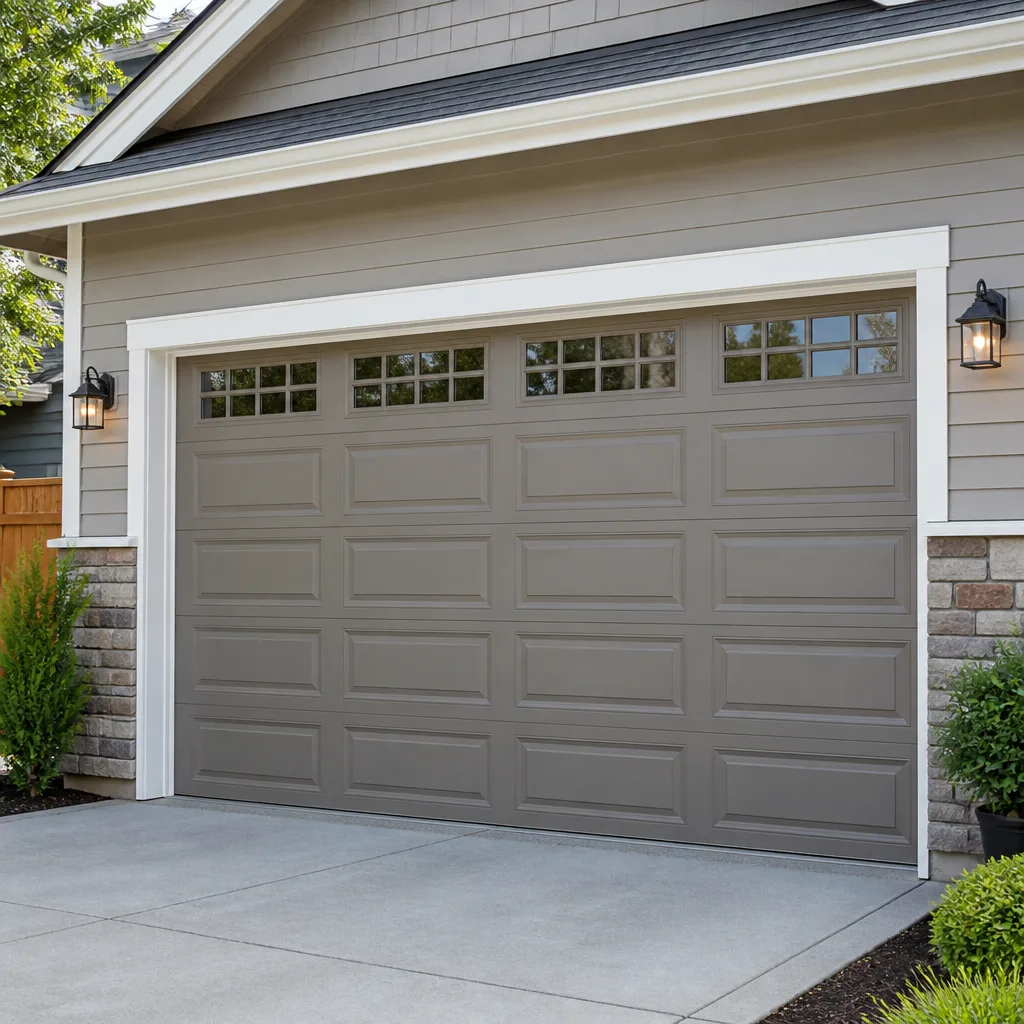
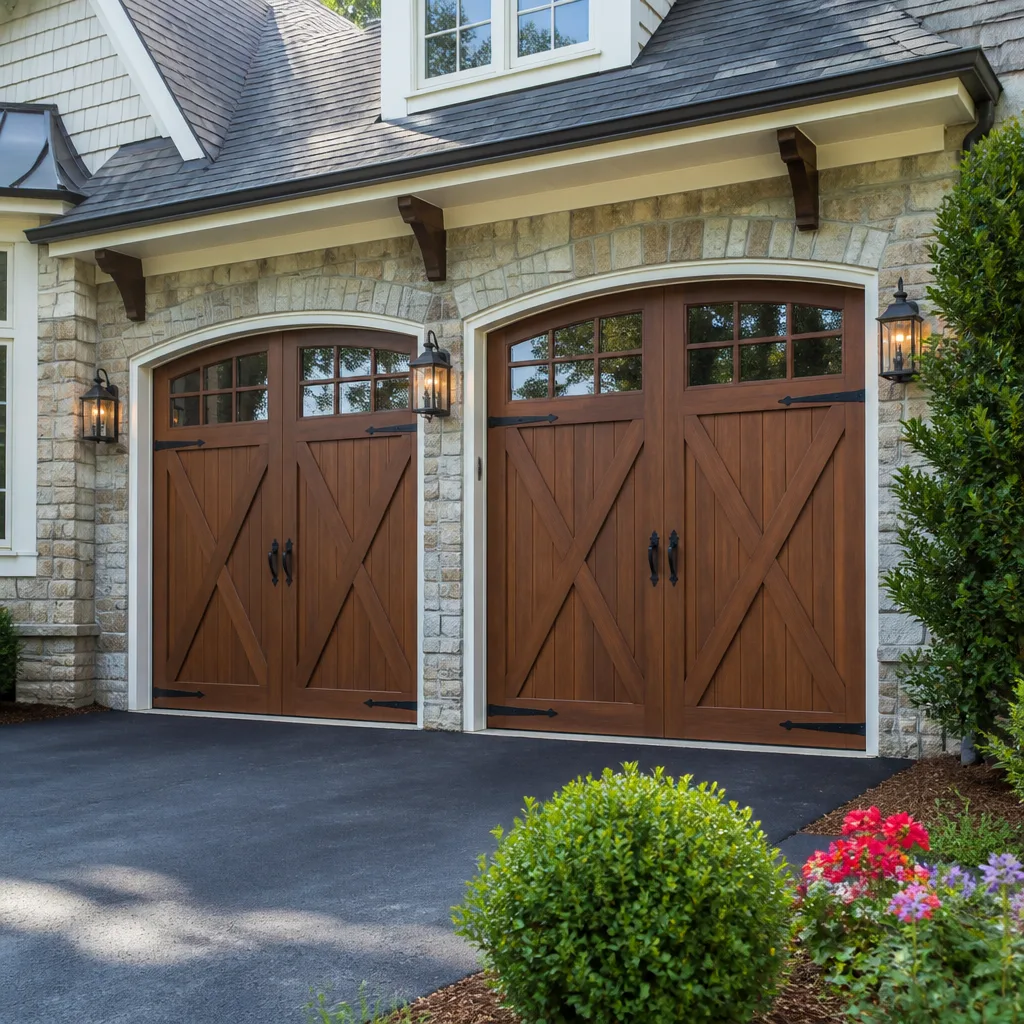
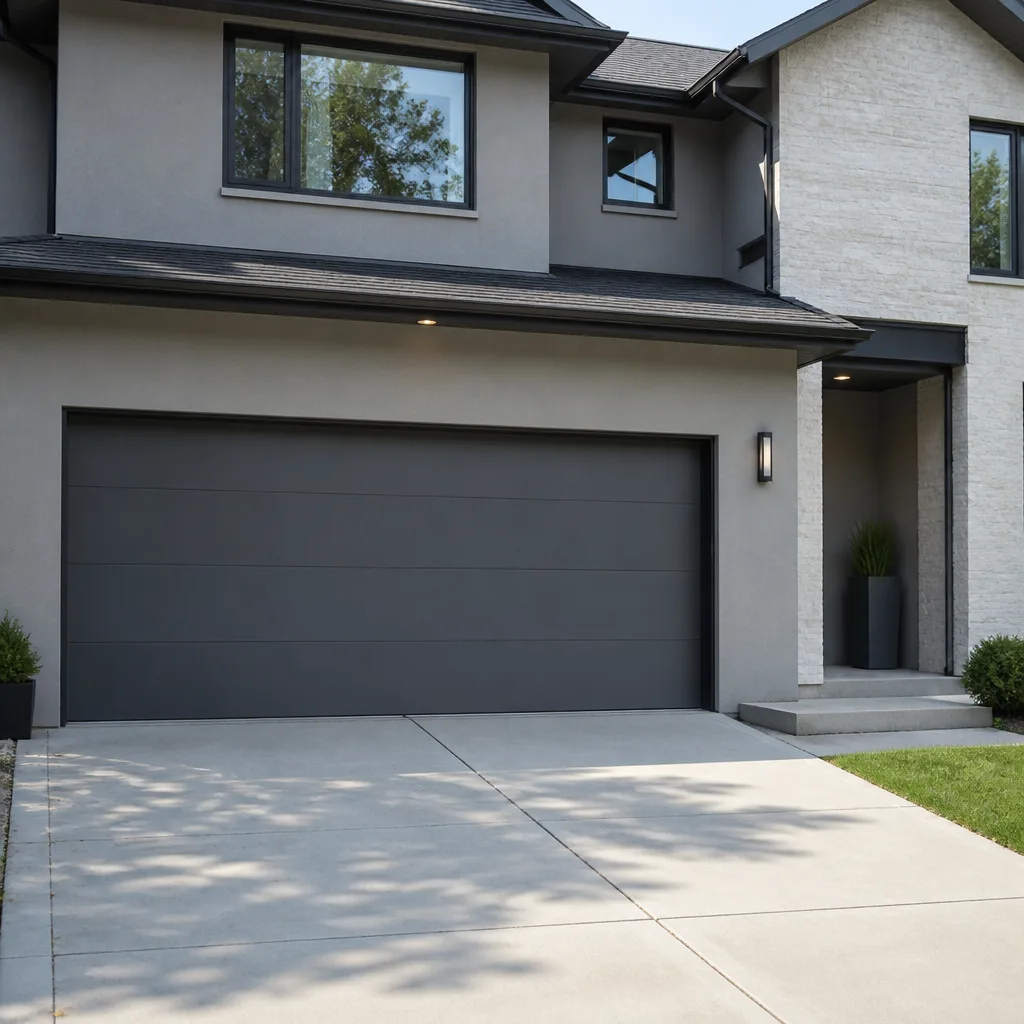
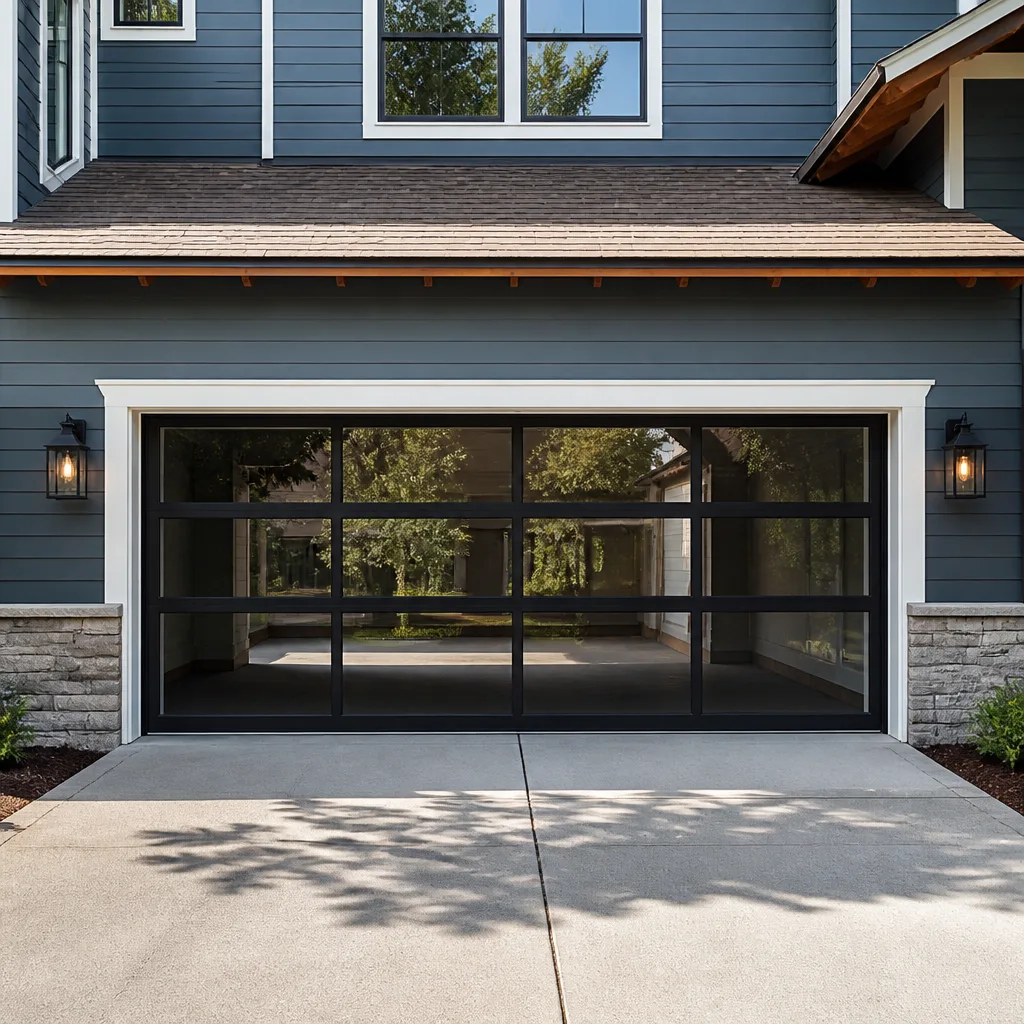
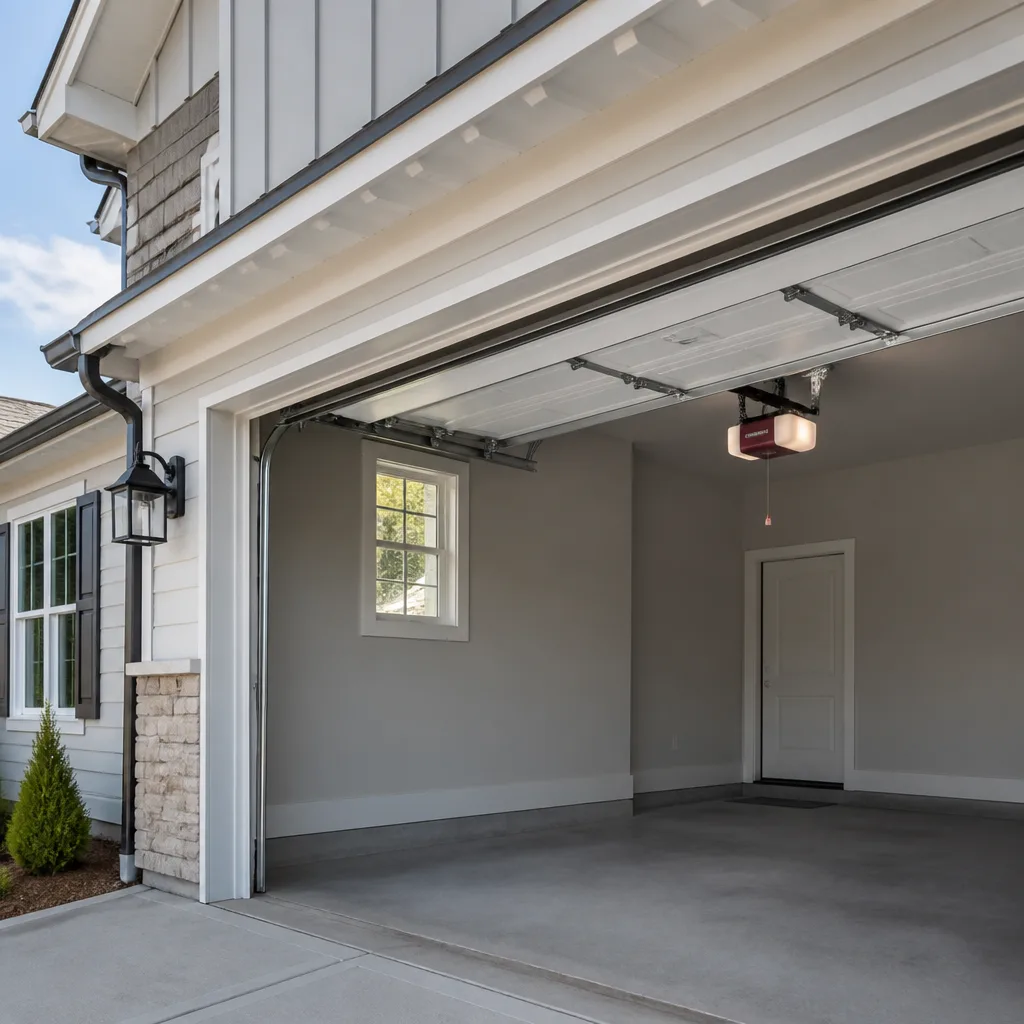
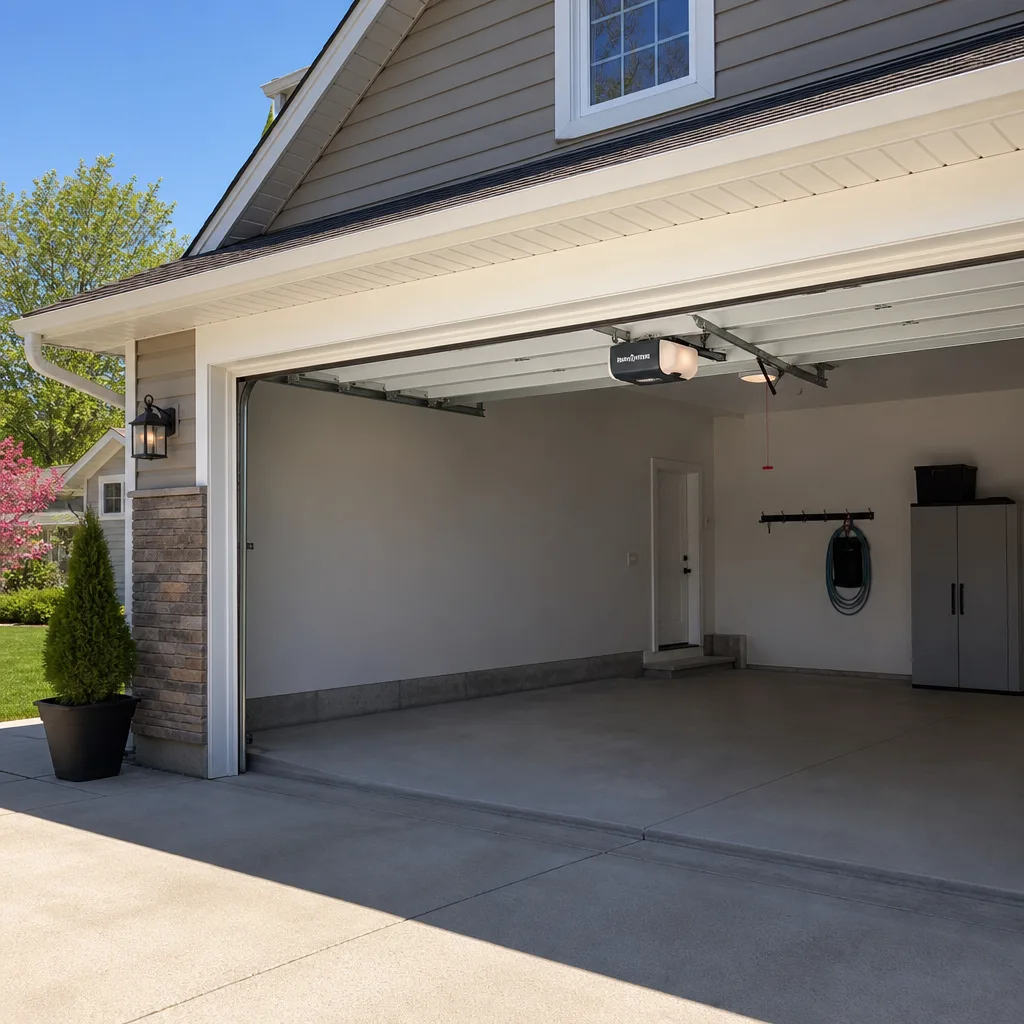
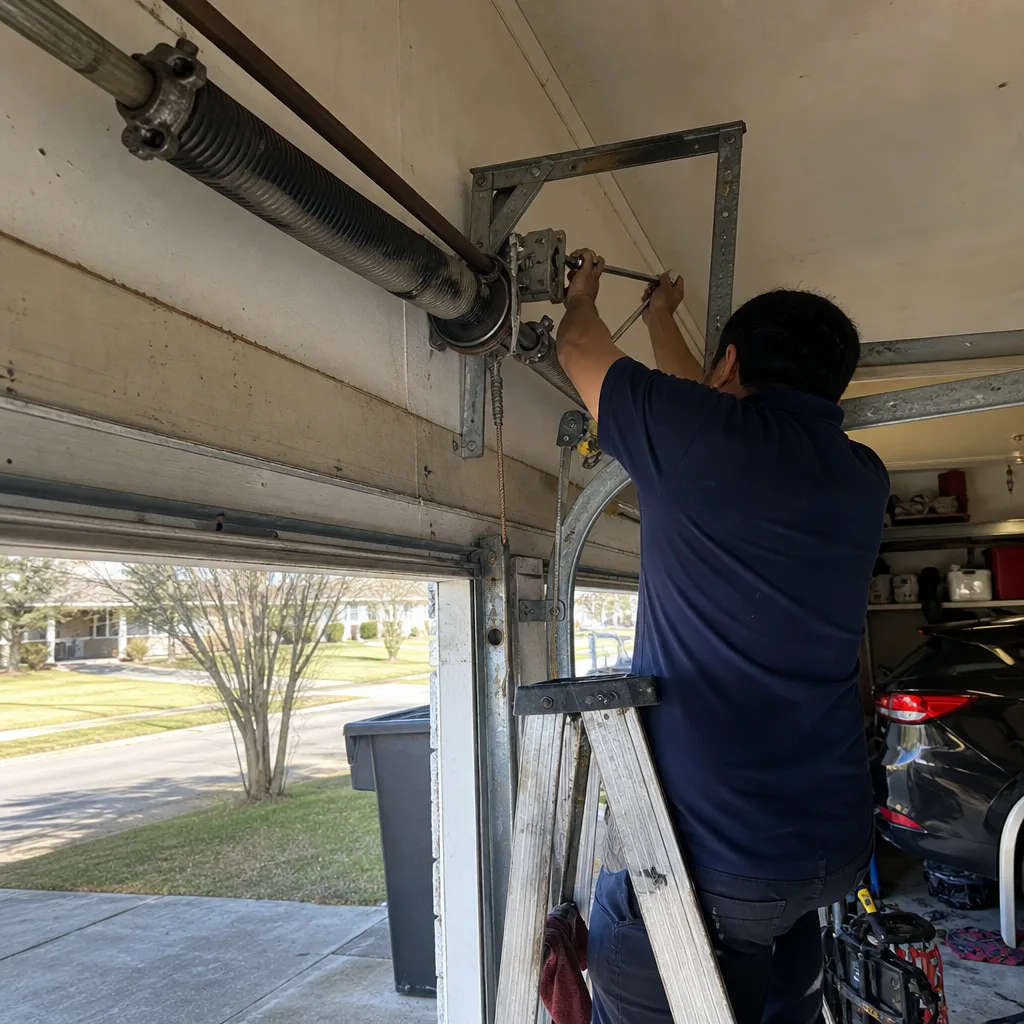 Before
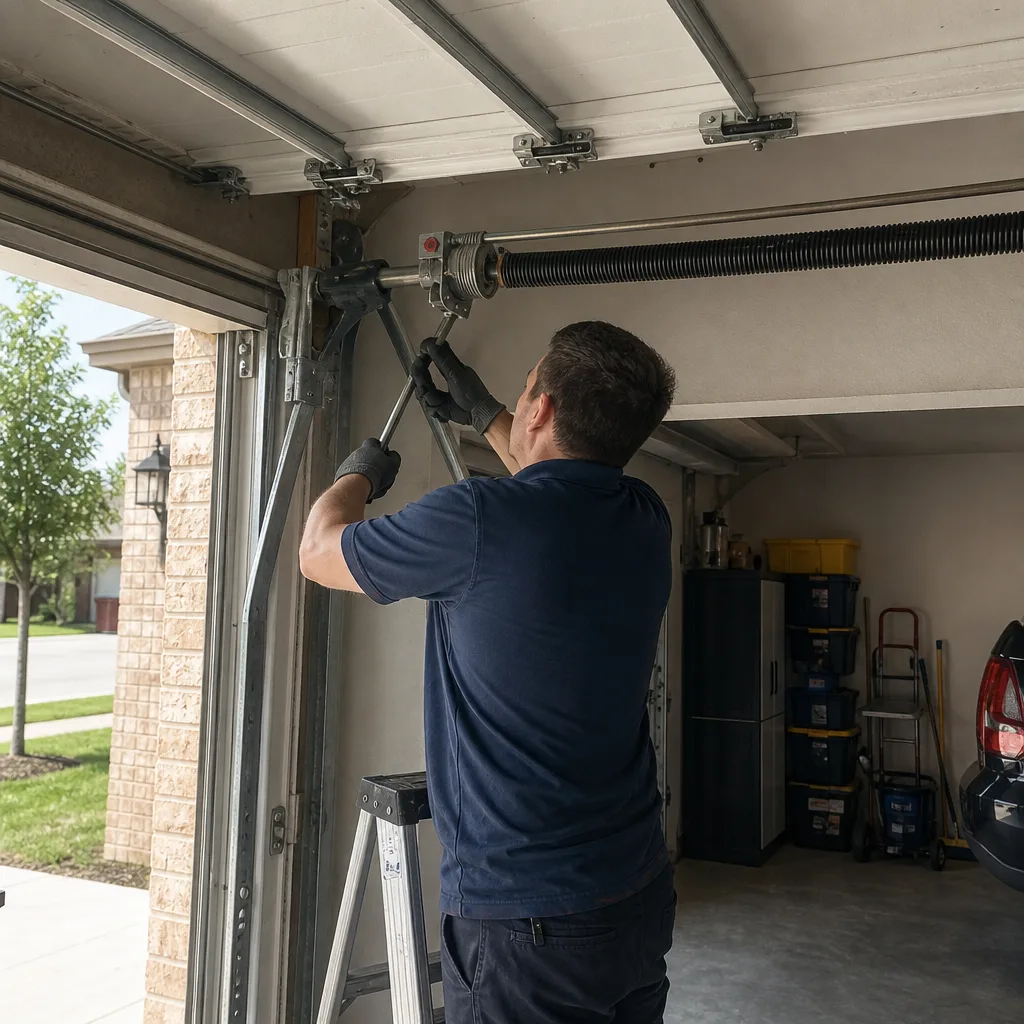 After
After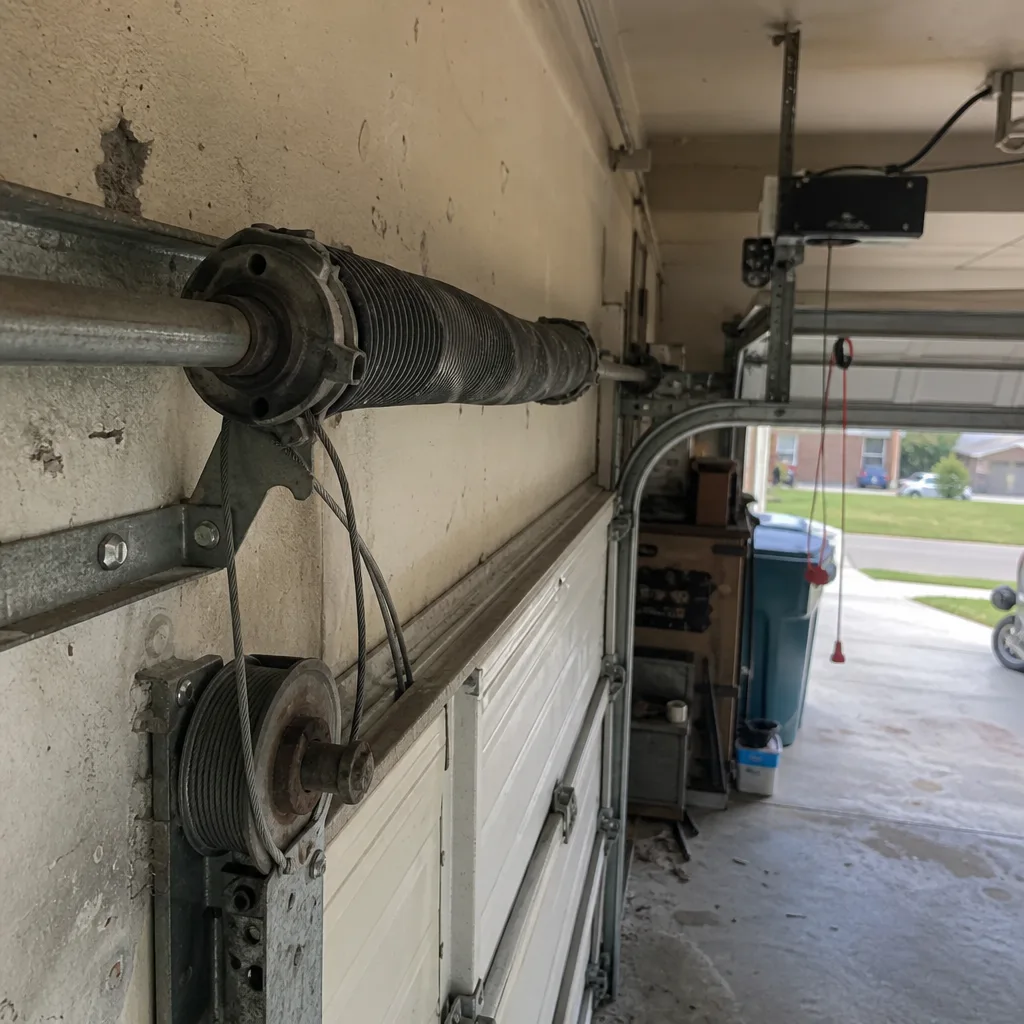 Before
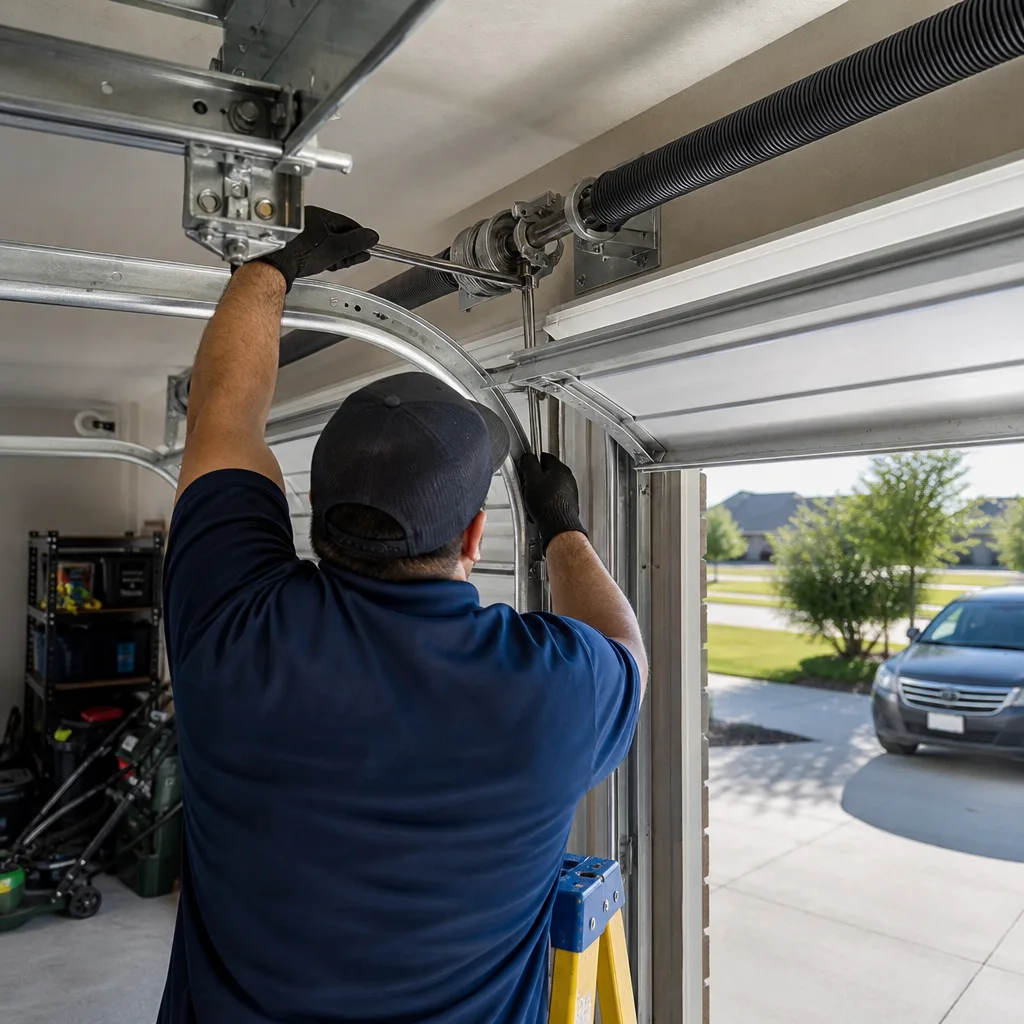 After
After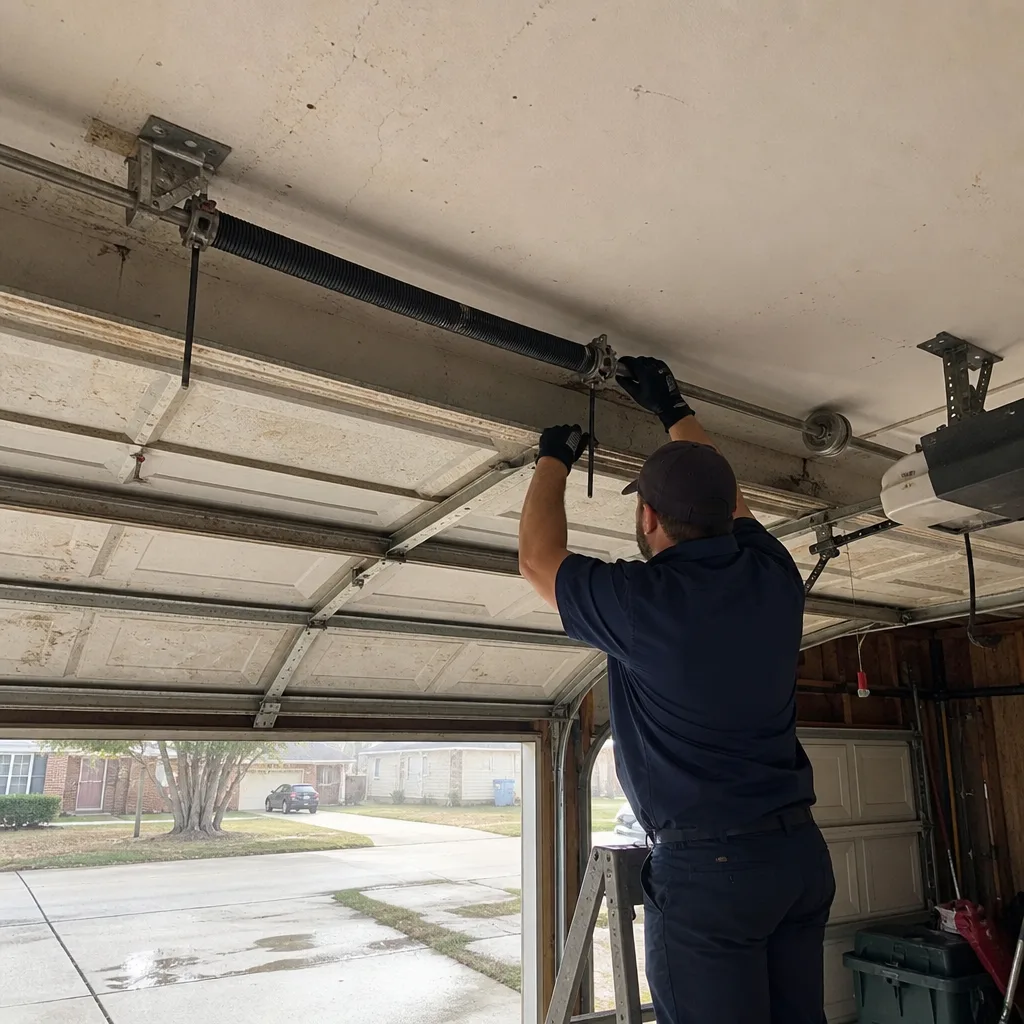 Before
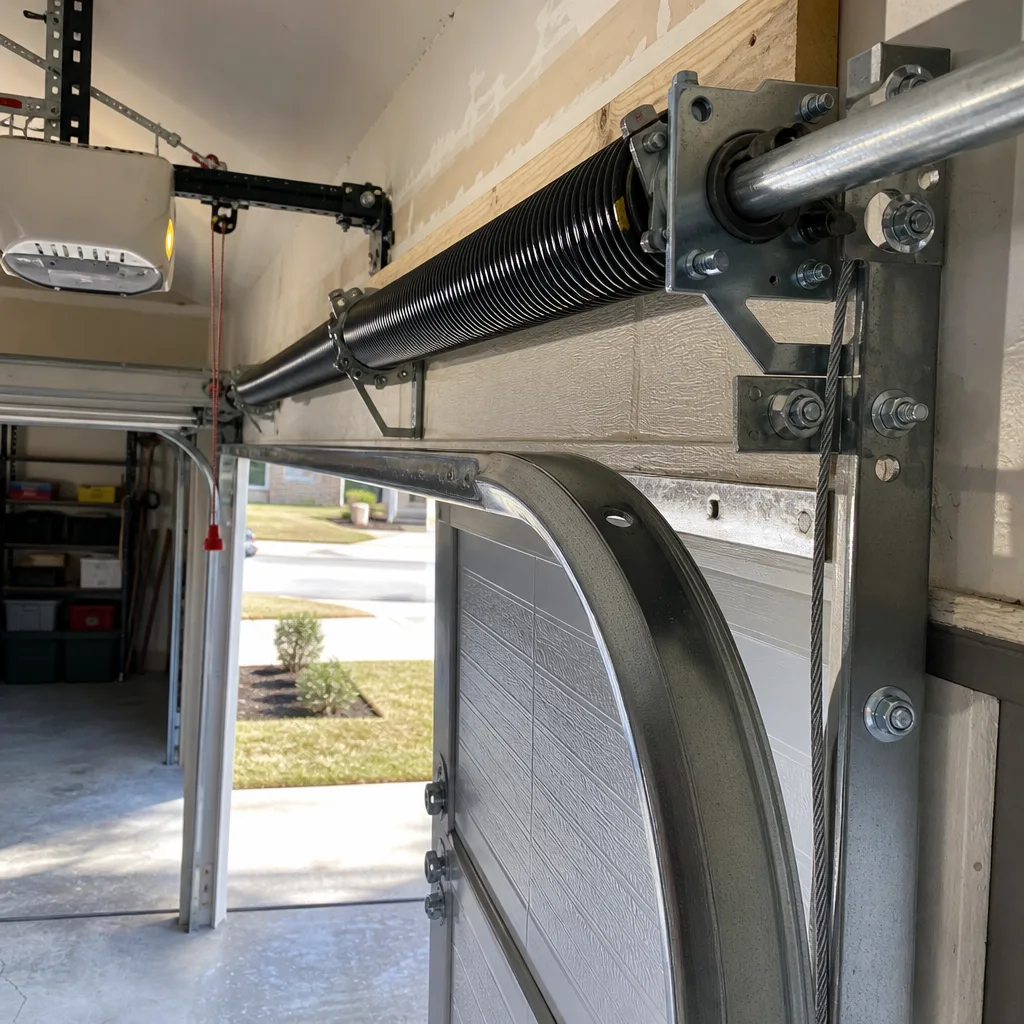 After
AfterThe Complete Guide to Garage Door in Rosenberg
The average Fort Bend County home opens and closes its garage door over 1,500 times a year - more than any other moving part in the house - yet most buyers spend less than 20 minutes choosing one. In Rosenberg, that hurried decision costs homeowners twice: first in energy bills, then in premature replacement. The clay soils along the Brazos corridor, the Gulf humidity that settles into uninsulated steel, and the HOA standards common in communities like Teravista and Bridlewood Estates all shape what “the right door” actually means here. This guide maps every decision - material, gauge, insulation, hardware grade, and installation detail - to the conditions your door will face in Fort Bend County, and you can find more guides & resources on our blog.
Quick Answer
A garage door in Rosenberg should be 24- to 25-gauge steel minimum with a thermal break and quality weatherseal, installed with heavy-duty hinges and rollers rated for 10,000 cycles, because Gulf humidity causes interior condensation rust in uninsulated doors and clay-soil settlement shifts door alignment within three to five years. The right door, properly specified for this climate and soil, lasts fifteen to twenty years. The wrong one fails in eight.
Table of Contents
- How Rosenberg’s Climate Destroys the Wrong Door
- Clay-Soil Settlement and What It Does to Alignment
- Steel Gauge, Insulation, and R-Value: What Actually Matters Here
- Builder-Grade vs. Trade-Grade Hardware: How to Tell What You Have
- Choosing a Door for Your Home Age, HOA, and Budget
- Brand and Model Guidance for Rosenberg Conditions
- Maintenance That Extends Life in This Climate
- What Garage Door Work Costs in Rosenberg
How Rosenberg’s Climate Destroys the Wrong Door
Rosenberg sits thirty miles inland from the Gulf of Mexico, close enough for humidity to stay above 70 percent for six months of the year, far enough for summer temperatures to climb past 95 degrees for weeks at a stretch. That combination creates a specific failure mode most national guides never mention: interior condensation on uninsulated steel doors.
Here is how it works. A single-layer steel door, 27-gauge or thinner, faces the sun on the exterior and meets air-conditioned garage air on the interior. The temperature differential causes moisture to form on the inside skin, where no paint or coating protects the metal. In Houston-area garages, we have pulled down doors after six years with rust blooming from the interior seams - holes you cannot see until they break through.
The fix is not simply “insulation.” It is a thermal break: either a polyurethane-foamed door with steel skins separated by the foam core, or at minimum a vinyl-backed insulated door that keeps the interior skin above the dew point. In Rosenberg’s climate, an uninsulated door is a temporary door.
Three climate-specific specifications to demand:
- Polyurethane foam fill, not polystyrene. Polyurethane bonds to the steel skins and eliminates the air gap where condensation forms. Polystyrene panels float loose and allow moisture migration.
- Interior vinyl or steel back, never exposed unfinished metal. Even with foam, the interior skin needs a moisture barrier coating.
- Heavy-duty bottom seal and jamb seals rated for UV and ozone. Standard rubber hardens and cracks in Texas sun within two years. EPDM or silicone-blend seals last five to seven.
We see the worst condensation damage in homes near the Brazos River floodplain, where humidity lingers even in winter, and in neighborhoods with south-facing garages that absorb afternoon sun. If your garage stays noticeably cooler than outside air in August, your door is working against you unless it is thermally broken.
Garage door repair in Rosenberg for rust damage typically runs $180 to $340 for panel replacement, but once interior rust starts, replacement is usually the only sound option.
Clay-Soil Settlement and What It Does to Alignment
Fort Bend County sits on the Beaumont Formation, a clay-dominant soil that expands when wet and contracts when dry. A single summer thunderstorm can swell the ground beneath your driveway; three weeks of August drought can shrink it back. That movement does not stop at your foundation. It transmits through the concrete pad to your garage door frame.
In our experience across Rosenberg, from the older homes near downtown to the newer builds in Canyon Gate at the Brazos, we see a predictable pattern. Year one to three after installation: door operates smoothly. Year four to six: gaps appear at the bottom seal on one side, or the door begins rubbing the jamb at the top corner. Year seven to ten: opener strain, premature gear wear, and eventually a door that will not close without manual assistance.
The root cause is rarely the door itself. It is frame shift. The vertical track on one side settles or tilts fractionally, and every cycle of the door worsens the misalignment. A door that weighs 150 pounds and opens twice daily exerts over 100,000 pounds of cumulative force annually against tracks that are no longer plumb.
What prevents this:
- Slotted track brackets at the jambs, not fixed-hole brackets, so a technician can realign without drilling new holes.
- Reinforced horizontal track supports anchored to the wall framing, not just the drywall or header board.
- Proper header preparation: a double 2×10 or engineered LVL header, not a single 2×8 that flexes under opener torque.
- Annual laser alignment check, which we include in our Mainspring Garage Door Co. home tune-up service.
Homes in the Grand Mission area, built during the 2010s development boom, are particularly susceptible because much of that fill was compacted during drought conditions and has continued to settle. We have realigned doors in that neighborhood that were installed by builders with fixed brackets and no adjustment range - a five-dollar part that determines whether your door lasts eight years or eighteen.
Steel Gauge, Insulation, and R-Value: What Actually Matters Here
Garage door marketing leans heavily on R-value. In Rosenberg’s climate, R-value is secondary to air-seal quality. A door with R-18 and gapped edges loses more conditioned air than an R-6 door with tight perimeter seals. The heat here is radiant and convective; stopping air movement matters more than resisting conduction.
That said, the numbers do matter. Here is how to read them for local conditions:
| Specification | Minimum for Rosenberg | Why It Matters |
|---|---|---|
| Steel gauge (exterior) | 24- or 25-gauge | Resists denting from wind-borne debris; thinner steel oil-cans in heat |
| Steel gauge (interior) | 27-gauge minimum with backing | Prevents flex that fatigues hinges and rollers |
| Insulation type | Polyurethane foam | Bonded to skins, no air gap, no condensation |
| R-value | 6.5 to 12 | Sufficient with good seals; higher R without seals wastes money |
| U-factor | 0.20 or lower | Measures total heat transfer; more complete than R alone |
| Wind load rating | W2 or W3 (90-110 mph) | Code requirement; critical for homes on open lots |
The “wind load” point deserves emphasis. Fort Bend County adopted stricter requirements after Hurricane Ike, but many doors installed before 2010 and even some replacement doors sold on price do not meet current standards. For details on local requirements, see Garage Door Permits, Codes & Inspections in TX: What You Need to Know. A W2-rated door has reinforced struts and heavier track; a non-rated door can bow or fail in a severe thunderstorm microburst. In Rosenberg’s open prairie geography, with little tree cover in newer developments, that is not theoretical.
We specify Clopay Gallery Collection or Amarr Stratford doors for most Rosenberg homes because both offer 24-gauge steel, polyurethane core, and W3 wind rating in standard configurations. Wayne Dalton’s 8300 and 8500 series are alternatives we use where budget constraints exist, though we upgrade the hardware package because Dalton’s standard rollers and hinges are builder-grade.
Builder-Grade vs. Trade-Grade Hardware: How to Tell What You Have
The door panel is only half the system. The hardware - hinges, rollers, springs, cables, and track - determines how smoothly it moves and how long it lasts. Most homeowners never see the difference until something breaks.
Builder-grade hardware, installed on most tract homes to meet a price point, has these markers:
- Stamped steel hinges, 18-gauge or thinner, with a single roller pin and no grease fitting. These fatigue at the pin hole after 5,000 to 7,000 cycles.
- Nylon rollers without ball bearings, or steel rollers with unsealed bearings. They bind and squeal within two years in dusty, humid garage air.
- Extension springs mounted above the horizontal track, not torsion springs on a shaft above the door. Extension springs wear unevenly and are a safety hazard when they break.
- Fixed-position track brackets with no adjustment slots, as mentioned in the soil section.
- Standard lift cables, 1/8 inch, not aircraft-grade 3/32 or 7×19 construction.
Trade-grade hardware, what we install on every garage door installation in Rosenberg:
- 14-gauge galvanized hinges with grease fittings
- Sealed ball-bearing nylon rollers rated for 50,000 cycles minimum
- Torsion spring system with a containment tube or safety cable
- Slotted, adjustable track brackets
- Aircraft-grade 7×19 lift cables with proper drum matching
The cost difference between builder and trade hardware on a standard 16×7 door is roughly $180 to $240 in parts. The life difference is ten years versus twenty. We have replaced builder-grade hinges on eight-year-old doors where the pin holes have elongated to ovals, causing the door to shudder and the opener to strain. The homeowner thought they needed a new opener. They needed $90 in hinges.
Safety note: Torsion springs store enough energy to cause serious injury or death if mishandled. Never attempt to adjust, wind, or release a torsion spring without proper training and tools. If you suspect spring wear - a door that feels heavy, opens unevenly, or requires manual assistance - call a professional. This is not a homeowner repair.
Choosing a Door for Your Home Age, HOA, and Budget
Rosenberg’s housing stock spans a century, from downtown bungalows to new construction in Harvest Green and Jordan Ranch. The right door matches the home’s structure, the neighborhood’s standards, and the owner’s timeline.
Here is our decision matrix for Rosenberg homeowners:
| Home Profile | Door Type | Hardware Grade | Budget Range (installed) |
|---|---|---|---|
| Pre-1980, no HOA, planning to sell within 5 years | Standard raised-panel steel, 25-gauge, polystyrene | Mid-grade with torsion conversion | $1,200 – $1,700 |
| 1980-2005, Fort Bend HOA, staying 10+ years | Carriage-house or contemporary, 24-gauge, polyurethane | Full trade-grade | $2,200 – $3,400 |
| 2005-present, active HOA, long-term home | Designer steel or wood-composite, W3 wind, custom finish | Full trade-grade with smart opener | $3,200 – $5,500 |
| Custom home or historic district | Wood or aluminum-glass, architect-specified | Heavy-duty custom | $4,500+ |
HOA considerations in Fort Bend County deserve specific attention. Teravista, for example, requires earth-tone colors and prohibits certain window configurations. Bridlewood Estates mandates carriage-house styling on street-facing garages. We pull the CC&Rs before quoting in these neighborhoods, because installing a non-compliant door means paying twice.
For homeowners in the “staying 10+ years” category, which describes most of our Rosenberg customers, we recommend prioritizing in this order:
- Thermal break and air seal - climate durability
- Trade-grade hardware - cycle life and smooth operation
- Wind rating - code compliance and storm resilience
- Panel style and window placement - curb appeal and HOA compliance
- Opener integration - smart features if desired, but only after the door itself is right
The $50 Off Any Repair Over $250 and $89 Seasonal Tune-Up offers apply to existing doors as well; many homeowners extend their current door’s life five years with proper hardware upgrades and maintenance.
Brand and Model Guidance for Rosenberg Conditions
We are factory-familiar with all major brands and install Clopay, Amarr, Wayne Dalton, Craftsman, and others based on the application. No brand is universally best. Each has models that suit Rosenberg’s climate and models that do not.
Clopay - The Gallery Collection and Canyon Ridge lines are our most-specified for Rosenberg. Gallery offers 24-gauge steel, polyurethane core, and a wide range of carriage-house overlays that satisfy HOA requirements without the maintenance of real wood. Canyon Ridge is a wood-composite alternative where the look of wood is required. Clopay’s Intellicore polyurethane is among the best at eliminating condensation issues.
Amarr - The Stratford and Lincoln lines offer comparable specifications at slightly lower price points. Amarr’s hardware packages are lighter than we prefer; we upgrade to 14-gauge hinges and sealed bearing rollers on every Amarr install. The Oak Summit carriage-house line is popular in Fort Bend County HOAs for its deep embossing that reads as wood from the street.
Wayne Dalton - The 8300 and 8500 series are budget-friendly with adequate steel and insulation, but Dalton’s proprietary pinch-resistant hinge design uses thinner material than standard 14-gauge. We specify Dalton only where cost is the primary constraint, and we upgrade the roller and hinge package.
Craftsman - Now manufactured by Chamberlain/LiftMaster under license, Craftsman doors are widely available through big-box retailers. The steel gauges are adequate but the hardware packages are consistently builder-grade. We use Craftsman panels only when a homeowner supplies them, and we replace the entire hardware system.
We do not recommend any brand’s lowest-price 27-gauge, uninsulated line for Rosenberg installation. They fail prematurely in this climate and cost more in energy and replacement than they save at purchase.
Garage door opener in Rosenberg selection pairs with door choice: a heavy polyurethane door requires a 3/4-horsepower opener minimum, and we specify belt drive for quiet operation in homes with bedrooms above or adjacent to the garage.
Maintenance That Extends Life in This Climate
A garage door in Rosenberg needs different maintenance than one in Phoenix or Minneapolis. The humidity, the clay soil, and the intense UV create specific wear patterns that a generic annual checklist misses.
Our seasonal tune-up, offered at $89, addresses these directly. What we check and why:
- Spring tension and balance. A door that does not stay at half-open position is out of balance, forcing the opener to work harder and fail early. Spring tension changes with temperature cycles; we adjust twice yearly in this climate.
- Roller condition and lubrication. Humidity washes out standard lubricants. We use lithium-based grease on hinges and silicone spray on rollers, reapplied every six months.
- Track alignment with laser level. Catches frame shift before it damages the door or opener. Critical after any significant rain period that may have affected soil moisture.
- Weatherseal pliability and contact pattern. Hardened seals leak conditioned air and allow pest entry. We check for even contact across the full width; gaps at the corners indicate frame movement.
- Opener force settings and safety reverse. Texas heat affects electronic components; we test the photo-eye alignment and force limits monthly during summer.
- Cable wear and drum condition. Humidity accelerates cable corrosion at the bottom loop. We inspect for fraying and replace at first sign.
Homeowners can perform visual inspection monthly: look for rust spots on the bottom panel interior, listen for grinding or squealing, and watch for uneven movement. But spring adjustment, cable replacement, and track realignment require professional tools and training. The force in a torsion spring can cause severe injury.
In neighborhoods with mature trees, like sections of Rosenberg south of Highway 59, we also check for debris in the track and spider web accumulation in the photo-eye housings - minor issues that cause major inconvenience when they trigger the safety reverse.
What Garage Door Work Costs in Rosenberg
Prices vary with door size, material, hardware grade, and whether the existing frame and opener can be reused. The ranges below reflect our actual 2024-2025 quoting in Fort Bend County, including permit fees where required; see our Garage Door Cost Breakdown: The Rosenberg Homeowner’s Reference for 2026 for deeper pricing context.
| Service | Typical Range | What Affects Price |
|---|---|---|
| Spring replacement (torsion, standard door) | $180 – $340 | Spring size, single vs. double spring, hardware condition |
| Cable replacement | $140 – $220 | One or both cables, drum condition |
| Roller and hinge upgrade (full set) | $220 – $380 | Door size, hinge count, roller grade |
| Panel replacement (one section) | $280 – $520 | Panel availability, color match, insulation type |
| Opener replacement (installed) | $420 – $780 | HP, drive type, smart features, battery backup |
| New door, standard 16×7, mid-grade | $1,800 – $2,600 | Steel gauge, insulation, window options, hardware grade |
| New door, premium with custom finish | $3,200 – $5,200 | Carriage-house overlay, wood or composite, W3 wind rating |
| Full system replacement (door + opener + hardware) | $2,800 – $4,800 | All of the above, plus disposal and frame prep |
We quote every job in writing before work begins. The price we state is the price on the invoice. No surprises, no add-ons discovered mid-job. Our Free Second Opinion offer applies to any written estimate from another company - bring it to us and we will review the specifications and pricing at no charge.
Senior and veteran homeowners receive a permanent 5% discount on all services, applied to the final invoice. The $50 Off Any Repair Over $250 applies to single repair visits and stacks with the senior/veteran discount.
Common Mistakes to Avoid
- Buying on door style alone. The prettiest carriage-house overlay fails in eight years if the steel is 27-gauge and uninsulated. In Rosenberg’s humidity, form must follow function.
- Ignoring the wind load rating. Fort Bend County requires W2 minimum; insurance claims after storm damage may be denied for non-compliant doors. Verify the sticker on the door edge or in the paperwork.
- Replacing the opener without checking door balance. A heavy or binding door burns out even the best opener in two years. We balance every door before recommending opener replacement.
- Accepting extension springs. Some low-price installers still use them because they are faster to install. They are less safe, wear unevenly, and are obsolete for residential use. Insist on torsion.
- Skipping the frame inspection. In clay-soil areas like Grand Mission and Harvest Green, the wood frame behind the track may have shifted or rotted. Installing a new door on a compromised frame guarantees callbacks.
- Choosing the lowest bid without specification comparison. A $1,400 door quote and a $2,200 quote are rarely the same product. We provide line-item specifications so you can compare apples to apples.
- DIY spring or cable work. The energy stored in a wound torsion spring can sever fingers or cause head trauma. This is not a cost-saving opportunity. It is a hospital visit waiting to happen.
When to Call a Professional
Call when the door makes new noises, moves unevenly, reverses unexpectedly, or shows visible damage to springs, cables, or panels. Call before the minor issue becomes a system failure. Call if your door is more than ten years old and has never had a professional balance and hardware inspection.
In Rosenberg’s climate, we recommend annual service for doors over five years old, and twice-yearly for doors facing south or west with no shade. The inspection takes forty minutes and catches the wear patterns that humidity and soil movement create.
Mainspring Garage Door Co. offers free estimates in Rosenberg. A technician arrives with a fully stocked truck, assesses your door and frame, and provides a written quote with no obligation. Most repairs are completed in a single visit. Call (281) 315-3920 to schedule.
Frequently Asked Questions
A properly specified and maintained garage door lasts fifteen to twenty years in Rosenberg. Doors with 24-gauge steel, polyurethane insulation, and trade-grade hardware reach the upper end; 27-gauge uninsulated doors with builder hardware often fail in eight to ten years due to interior rust and hinge fatigue. Annual maintenance extends life by three to five years.
A standard 16×7 replacement door, installed with mid-grade hardware, ranges from $1,800 to $2,600 in the Rosenberg market. Premium carriage-house or custom-finish doors run $3,200 to $5,200. Full system replacement with opener adds $800 to $1,400. We quote exact prices after measurement, and every quote is itemized so you see where the money goes. Call (281) 315-3920 for a free estimate.
Same-day installation is not available because doors are measured, ordered, and scheduled. We offer same-day response for repair calls, and we carry common door sizes in stock for next-day installation when needed. A new door requires precise measurement, color and style confirmation, and typically a one-week lead time for factory orders.
No. The price we quote is the price you pay. We inspect thoroughly before quoting, and our written estimate specifies every component. If we discover concealed damage, like a rotted frame behind the track, we stop and discuss options before proceeding. You approve every dollar before work starts.
Yes. Our technicians arrive with springs, cables, rollers, hinges, openers, and remotes for all major brands. Most repairs are completed in a single visit with no waiting for parts. For door replacement, we measure and order; for repair, we fix it then and there.
We most often specify Clopay Gallery Collection or Amarr Stratford for Rosenberg homes because both offer 24-gauge steel with polyurethane foam core that prevents interior condensation rust. Wayne Dalton 8300/8500 series work for budget-conscious buyers when paired with our upgraded hardware package. We avoid any brand’s uninsulated 27-gauge line for this climate.
The Bottom Line
A garage door in Rosenberg faces Gulf humidity, clay-soil movement, and summer heat that generic advice does not address. The right door is 24-gauge steel minimum, polyurethane-foamed, with trade-grade hardware and a W2 or W3 wind rating. The right installation includes slotted track brackets for future adjustment and a frame inspection that catches soil-shift damage. The right maintenance is annual, climate-specific, and focused on balance, alignment, and seal condition before they become expensive failures.
Most homeowners will replace one or two garage doors in a lifetime. The difference between a door that lasts eight years and one that lasts twenty is not luck. It is specification, installation detail, and maintenance matched to local conditions. That is what we have done for Rosenberg homeowners since Carl Dutton opened this shop, and it is what we still do on every job.
Written by Carl Dutton, Owner at Mainspring Garage Door Co., serving Rosenberg since 2016.