
Last updated September 10, 2026
Full 25-point door and opener safety check with every visit - springs, cables, rollers, tracks, and your LiftMaster or Chamberlain opener included
You get a price before we start. It does not change when the truck arrives.
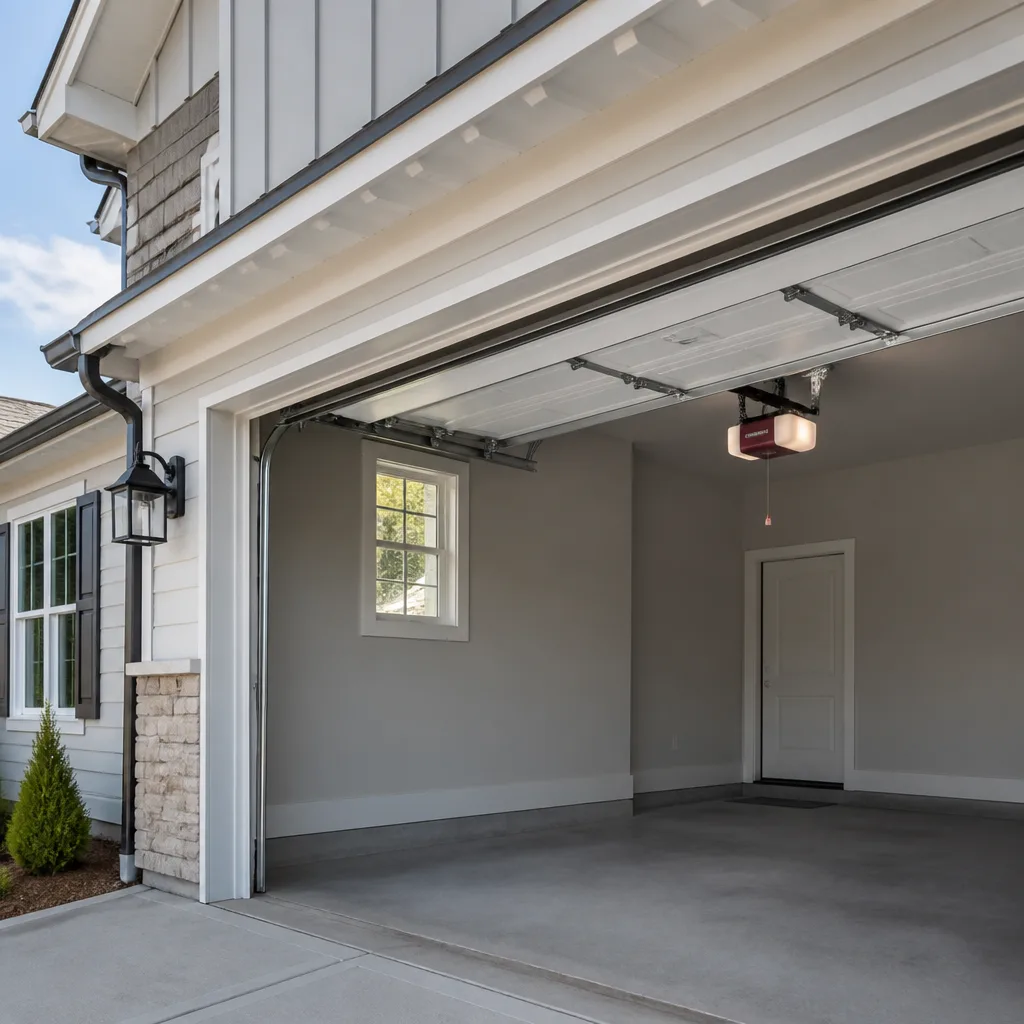
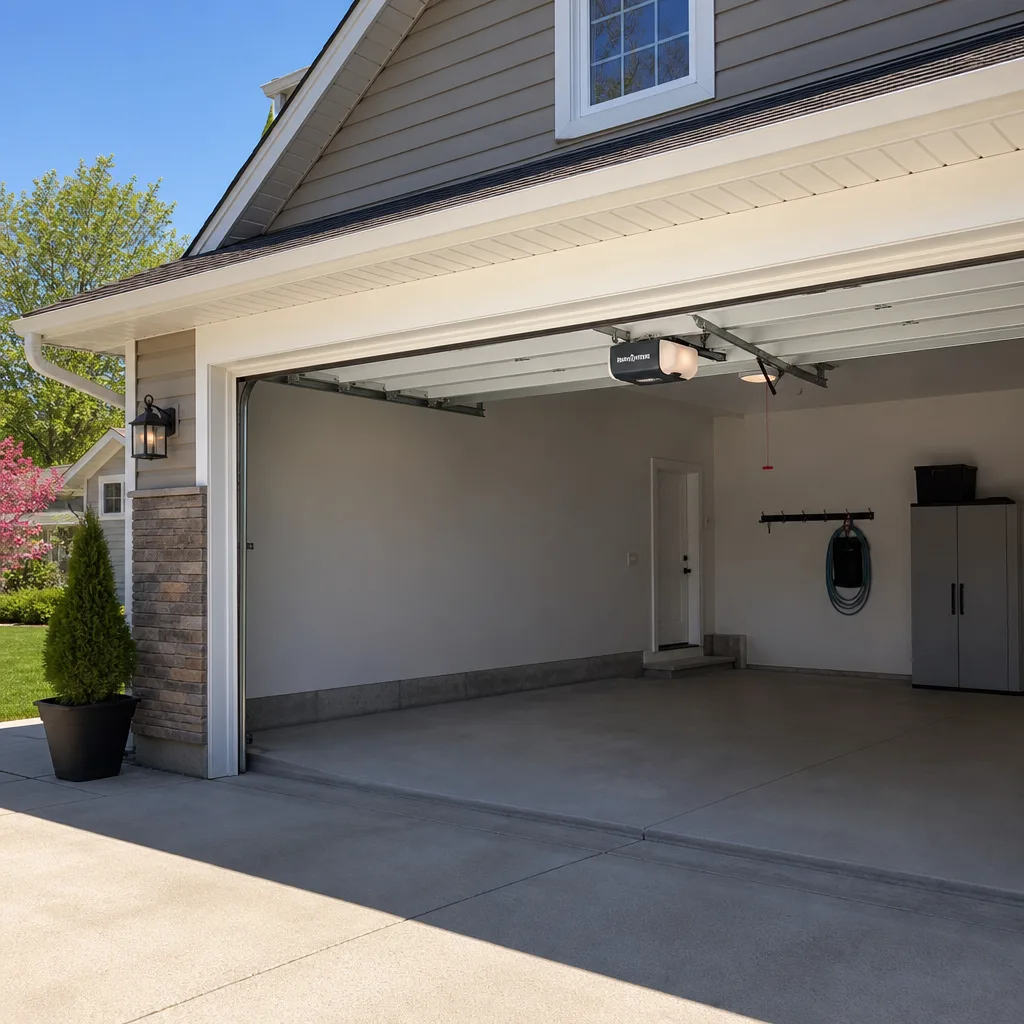
 Before
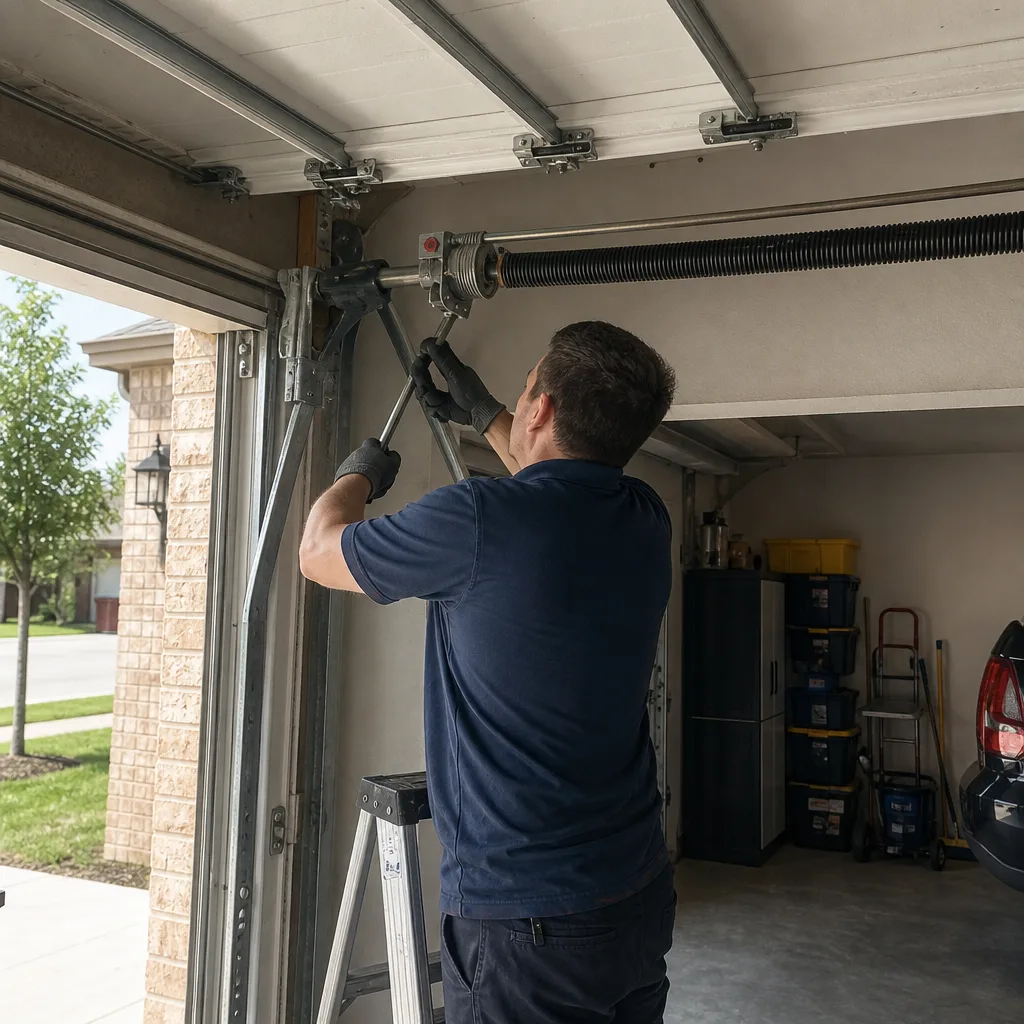 After
After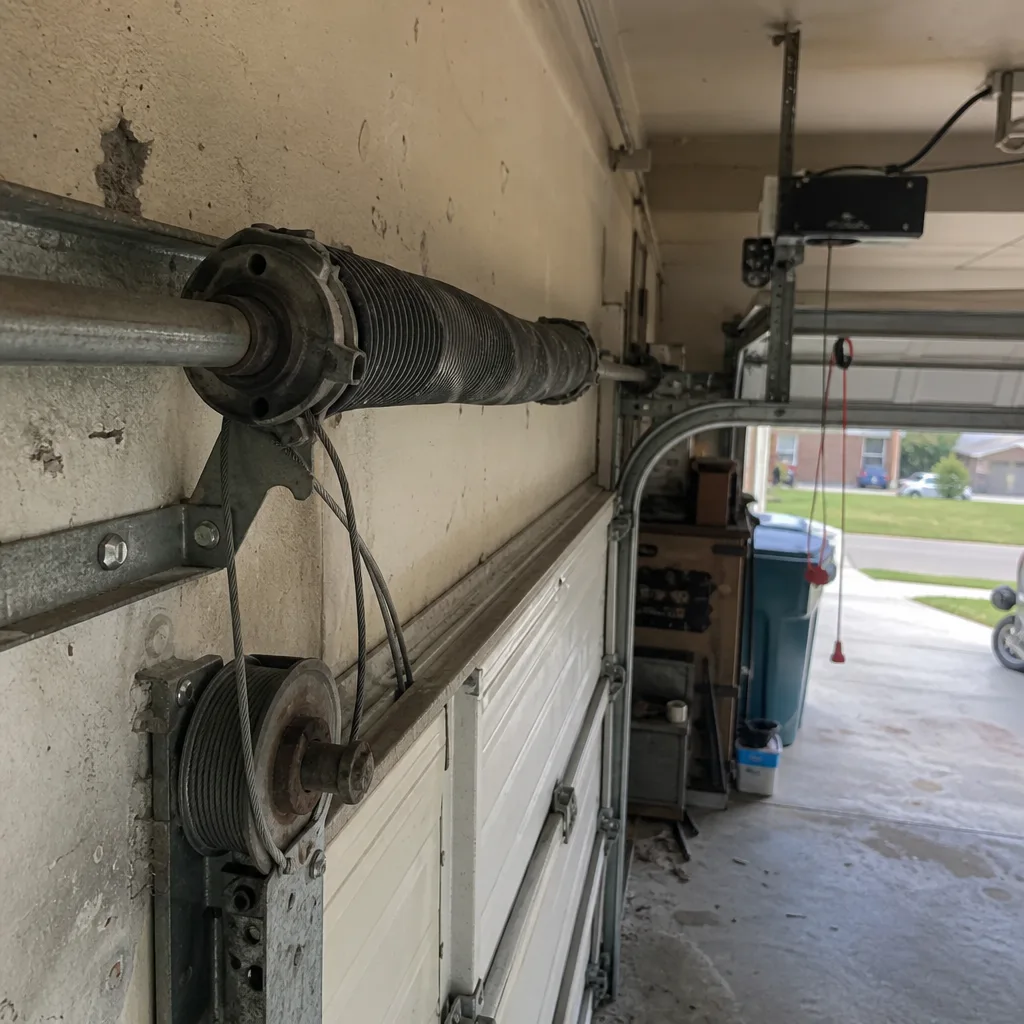 Before
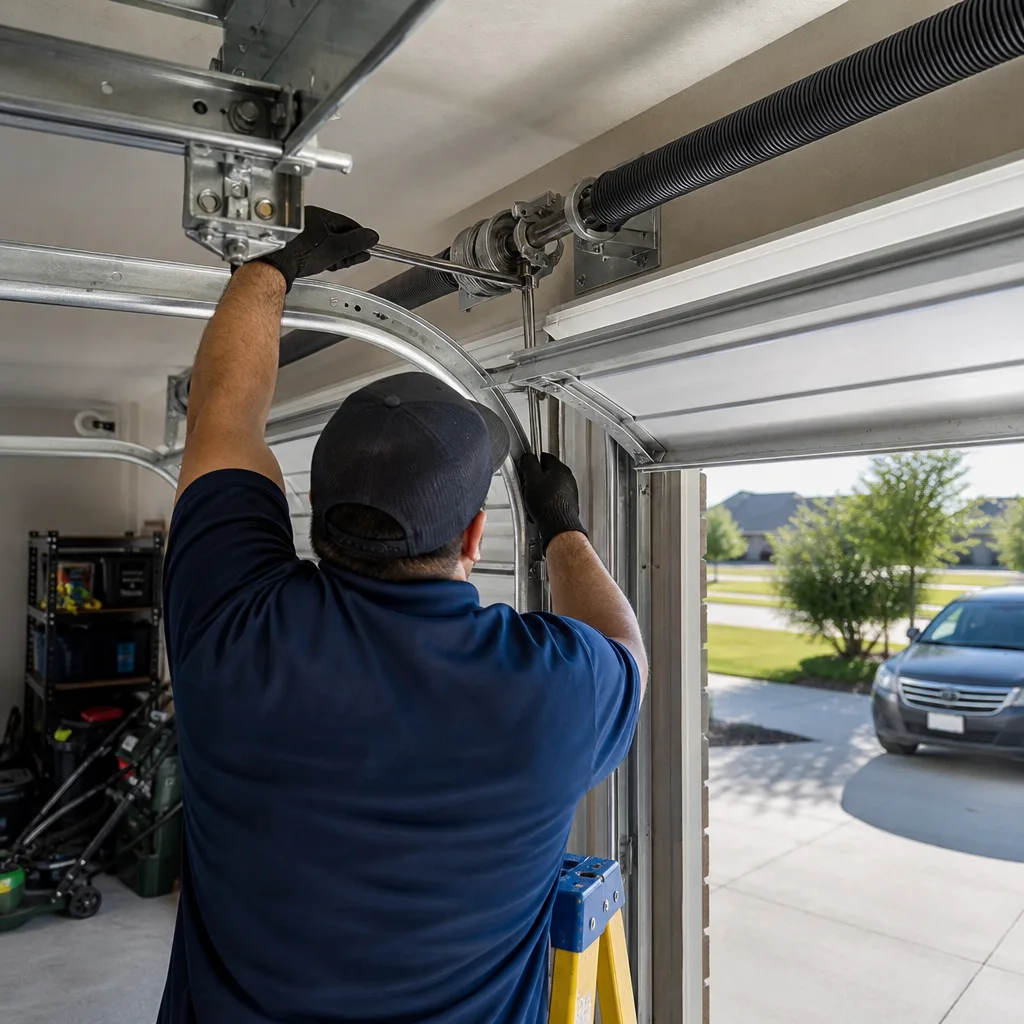 After
After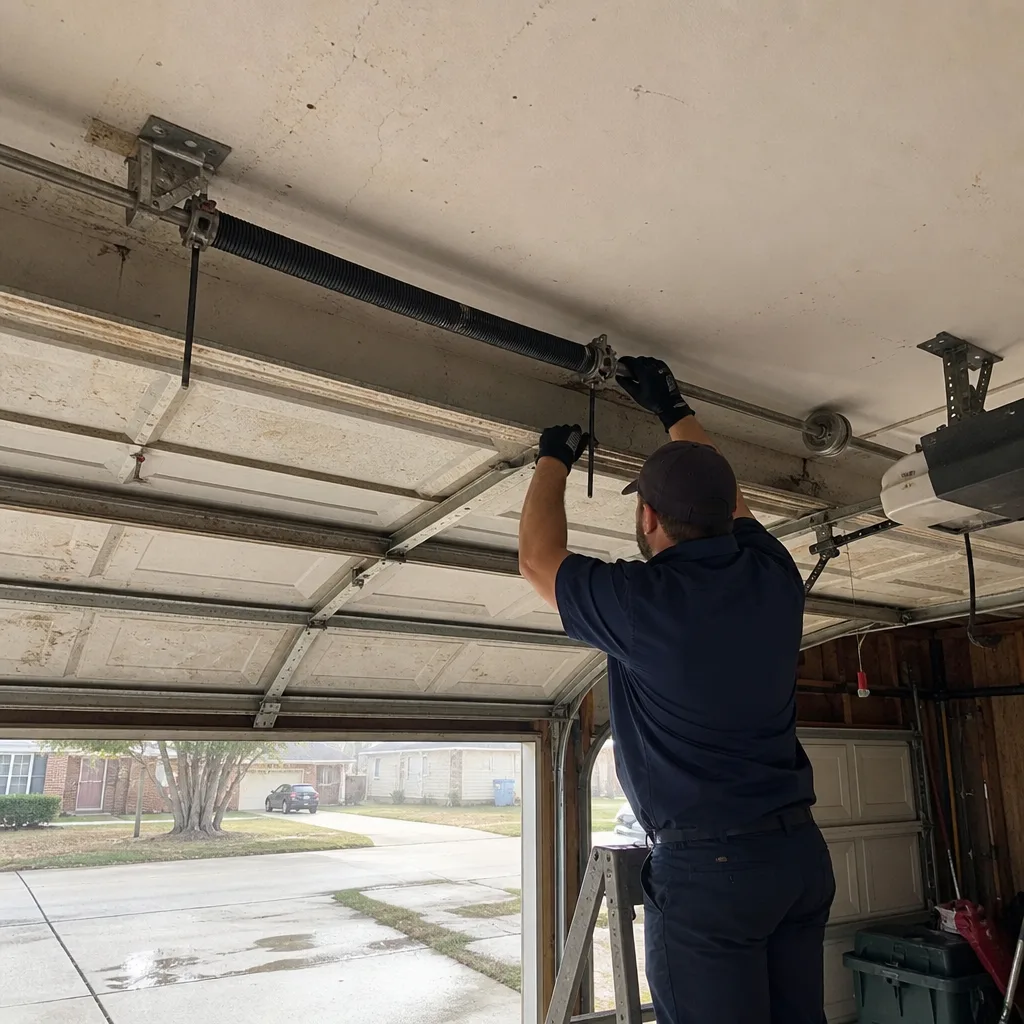 Before
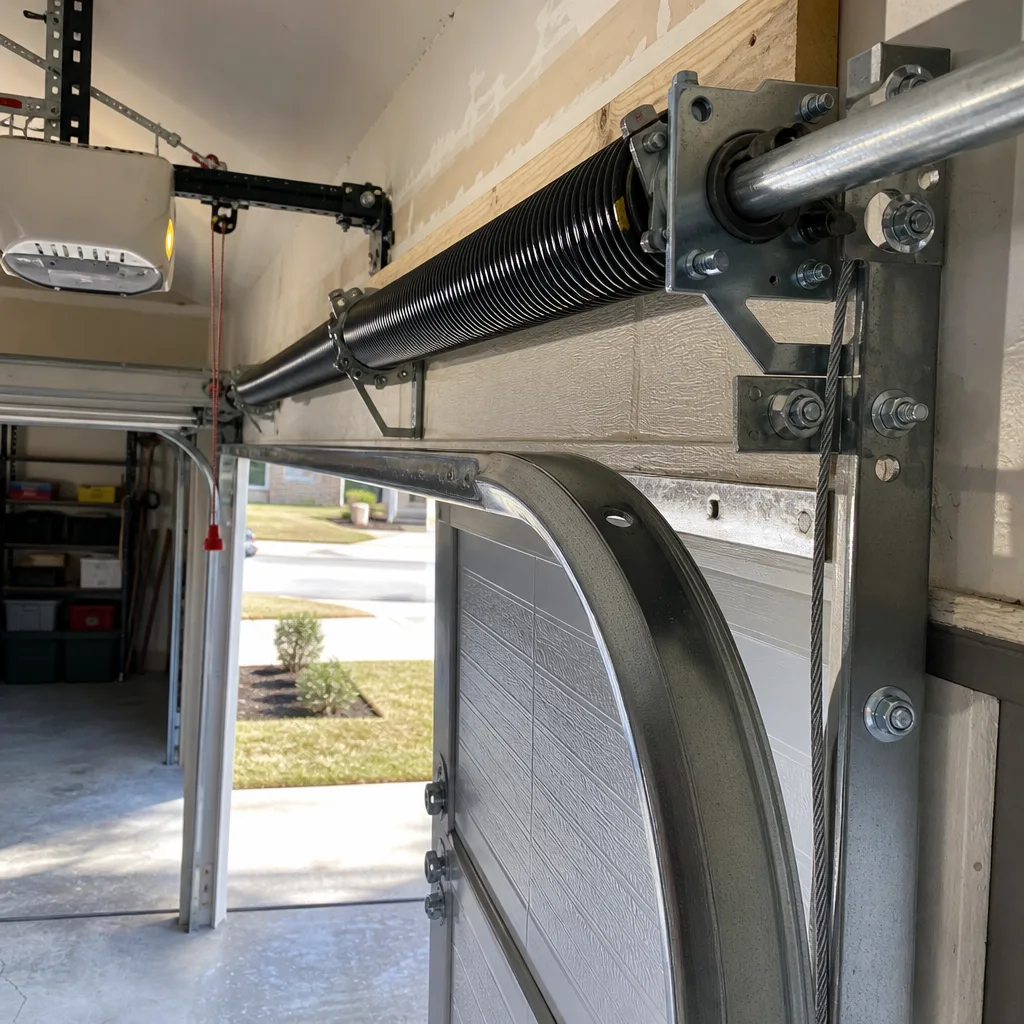 After
AfterSeasonal Garage Door Care for Rosenberg: Year-Round Homeowner’s Guide
The February 2021 freeze that left Rosenberg without power for days also cracked thousands of garage door bottom seals and seized torsion springs that had not been lubricated before the cold arrived. Homeowners who thought a garage door was “set it and forget it” learned the hard way that Texas Gulf Coast weather does not forgive neglect. In this Complete Guide to Garage Door in Rosenberg, we will walk you through what we have learned from 42 years of service calls in Rosenberg: a maintenance calendar built for long brutal summers, sudden hard freezes, and the storm windows that do the real damage.
Quick Answer
Garage door maintenance in Rosenberg should follow a Gulf Coast calendar, not a four-season template: pre-hurricane hardware checks before June 1, thermal expansion inspections during peak summer heat, freeze-prep lubrication before any forecast below 28°F, and post-storm cable and spring assessments after tropical weather passes. Most homeowners who follow this schedule avoid emergency repairs entirely and extend door life by 30-40%.
Table of Contents
- Why Rosenberg’s Climate Breaks Garage Doors Differently
- Pre-Hurricane Season Checklist: Before June 1
- Summer Heat Protocol: July Thermal Expansion Checks
- Fall Transition: Preparing for the Next Abuse Cycle
- Freeze-Prep Routine: When 20°F Is 48 Hours Out
- Post-Storm Inspection: After Tropical Weather Passes
- What You Can Safely Check vs. What Requires a Pro
- Common Mistakes to Avoid
- When to Call a Professional
- Frequently Asked Questions
- The Bottom Line
Why Rosenberg’s Climate Breaks Garage Doors Differently
National garage door maintenance guides assume four mild seasons. Rosenberg has something else entirely: a six-month summer where attic temperatures above the garage routinely hit 140°F, a hurricane season that runs from June through November with real wind-load risk, and sudden arctic intrusions that can drop temperatures 50 degrees in twelve hours. The 2021 freeze was not a fluke. It was a reminder that the Gulf Coast’s “mild winter” can turn lethal for unprepared hardware.
We have replaced springs in Rosenberg homes that failed in August heat, their tempered steel fatigued by thousands of expansion-contraction cycles. We have unseized openers in Garage Door Repair in Rosenberg calls where lithium grease had turned to paste after a July week of 105°F index days. And we have seen bottom rubber seals, hardened by UV exposure, simply shatter when cold made them brittle.
The neighborhoods matter too. Homes in the Pecan Grove area, many built in the 1990s with original hardware, face different wear patterns than newer construction in Canyon Gate at the Brazos. Older track systems were not designed for the wind-load requirements that became standard after Hurricane Ike. We see this on every inspection.
What this means practically: your maintenance calendar should prioritize June preparedness, July thermal monitoring, November hardware recovery, and January freeze vigilance. The months between are for observation, not complacency.
Pre-Hurricane Season Checklist: Before June 1
Hurricane season officially begins June 1, but the hardware preparation should be complete by Memorial Day. A garage door is the largest opening in most Rosenberg homes, and if it fails in high wind, the pressure differential can lift the roof. This is not theoretical. We have inspected homes after Ike, Harvey, and Nicholas where the door was the failure point.
Here is what we check on every pre-season inspection in Rosenberg:
- Wind-load label verification. Post-2008 doors in Fort Bend County should carry a wind-load rating sticker, usually inside the top section. If your door lacks one, it may predate current code and is a candidate for Garage Door Installation in Rosenberg with proper reinforcement.
- Anchor bolt torque check. The track-to-jamb brackets are secured with lag bolts or concrete anchors. We check for loosening from seasonal wood movement, particularly in homes with cedar or pine framing common in Rosenberg’s older subdivisions. A loose anchor lets the track flex; flexing lets the door derail in wind.
- Track plumb and parallelism. Vertical tracks must be perfectly plumb and parallel to each other within 1/4 inch. Hurricane-force wind loads any misalignment heavily. We use a laser level, but a careful homeowner can spot obvious bowing or gaps.
- Hinge and roller condition. We replace any roller with visible bearing wear or hinge with cracked steel. In a wind event, a failed roller becomes a projectile.
- Opener emergency release function. If power fails, you must be able to disengage the opener manually. We test this under load, not just by pulling the red handle.
- Backup power consideration. For homes with medical equipment or vehicles needed for evacuation, a battery backup for the Garage Door Opener in Rosenberg is worth discussing. LiftMaster and Chamberlain both make compatible units.
The $89 Seasonal Tune-Up we offer every spring includes all six points, documented with photos. Most Rosenberg homeowners who schedule before June 1 do not think about their door again until fall.
Summer Heat Protocol: July Thermal Expansion Checks
July in Rosenberg is not merely hot. It is thermally aggressive. The steel track system installed at 70°F in March has expanded by measurable fractions of an inch by mid-July. The gap between track sections, carefully set during installation, may have closed entirely. When adjacent track segments press against each other, the door binds, the opener strains, and eventually something fails.
We see this pattern repeatedly in summer service calls. The homeowner reports the door “suddenly” making noise or the opener “working harder.” What happened was invisible thermal creep over weeks.
What to check in July:
- Track section gaps. Look at the joints where horizontal track sections meet. You should see a small, consistent gap, roughly 1/8 inch. If sections are touching, the thermal expansion has consumed the installation tolerance. This requires professional adjustment; do not loosen track hardware yourself, as the spring tension makes this dangerous.
- Spring tension indicators. Torsion springs lose some tension in extreme heat, then regain it when temperatures drop. A door that drifts downward when released at head-height in March may stay put in July. This is normal variation, but if the door feels “heavy” to lift manually or will not stay open at waist height, the spring balance needs correction.
- Opener thermal shutdown. Craftsman and Raynor openers, among others, have thermal protection circuits that shut the motor down if internal temperatures exceed safe limits. If your opener stops mid-cycle on the hottest afternoons and resumes after sundown, this is likely the cause. Ensure the motor unit has adequate ventilation and is not enclosed in an unventilated housing.
- Lubricant condition. Standard lithium-based garage door lubricants thin in heat and can run off vertical surfaces. We use a high-temperature synthetic on summer service calls in Rosenberg, applied sparingly to rollers, hinges, and bearing plates. WD-40 is not a lubricant for this application; it evaporates and leaves residue.
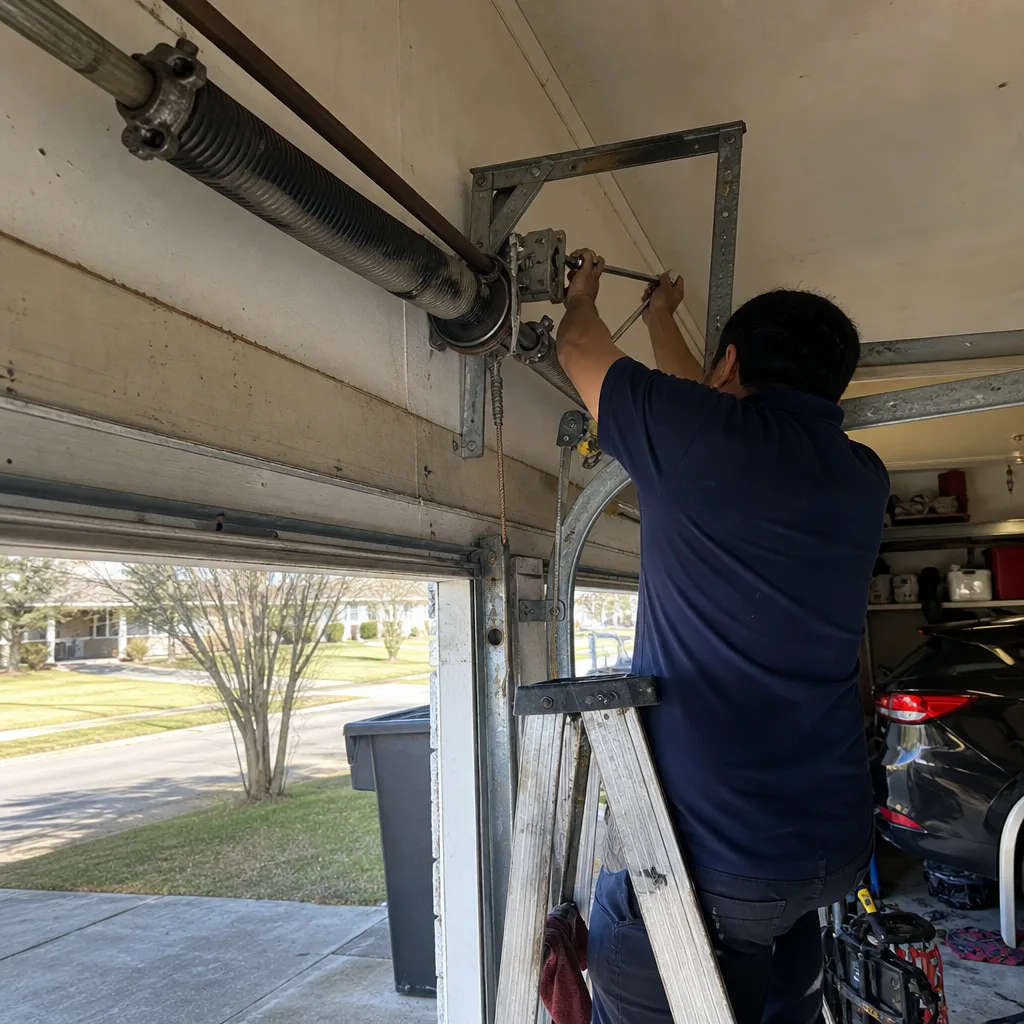
The critical distinction: spring and cable work is never a homeowner task. The torsion spring above your door stores enough energy to cause serious injury or death if mishandled. We have seen the aftermath of DIY spring attempts, and we do not recommend it. If summer heat has affected spring performance, call for professional service.
Fall Transition: Preparing for the Next Abuse Cycle
October and November in Rosenberg are the recovery months. The hurricane season is winding down, the worst heat has passed, and the door has survived another summer. This is when systematic maintenance pays dividends through winter and into the next spring.
Our fall protocol for Rosenberg homes:
- Full hardware inventory. We inspect every hinge, roller, bracket, and fastener for corrosion or fatigue. The humid Gulf Coast summer accelerates rust on unprotected steel. Any component with pitting or measurable wear gets replaced before winter stress begins.
- Weather seal replacement assessment. Bottom seals and perimeter weatherstripping hardened by summer UV will not flex properly in cold. We check compression set, the permanent deformation that occurs when rubber has been compressed too long at temperature. A seal that no longer springs back to shape is failing.
- Spring cycle count evaluation. Standard torsion springs are rated for approximately 10,000 cycles. A typical Rosenberg household with two working adults cycles the door 4-6 times daily, or roughly 1,800 cycles annually. If your springs are original to a 2005 installation, they are living on borrowed time. Fall replacement, before winter cold makes brittle steel more prone to sudden failure, is prudent timing.
- Opener force setting verification. We test and document the force required to trigger the safety reverse. Summer heat may have altered friction in the system; fall is the time to recalibrate to manufacturer specification.
- Photo-eye alignment and cleaning. Pollen, dust, and insect accumulation on the safety sensors is a constant in Rosenberg. We clean lenses and verify alignment to prevent the “door won’t close” call that always seems to come at the worst moment.
Fall is also when our $89 Seasonal Tune-Up sees its second peak of demand. Homeowners who scheduled in spring often book again, treating garage door maintenance like an oil change: predictable, scheduled, and never an emergency.
Freeze-Prep Routine: When 20°F Is 48 Hours Out
Rosenberg’s average winter low is 44°F, which means nothing when an arctic front drops the temperature to 18°F overnight. These events are infrequent but devastating to unprepared garage doors. The February 2021 freeze, with temperatures below 15°F for multiple days, destroyed hardware that had run for decades without issue.
The mechanism is straightforward: lubricants thicken, steel contracts, and rubber seals become rigid. A door that operated smoothly at 50°F may not move at all at 20°F. Worse, homeowners who force a frozen door can strip gears, break springs, or pull cables off drums.
When the forecast shows a hard freeze approaching, here is what we recommend:
- Lubricate moving parts 24-48 hours before. Use a silicone-based lubricant rated to -40°F. Apply to rollers, hinges, and the torsion spring bearing plates. Do not apply to the spring itself; the coating can trap moisture and accelerate corrosion.
- Check the weather seal for cracks. A compromised bottom seal lets cold air and moisture under the door. Moisture on the concrete threshold freezes, and the door becomes glued to the floor. Replace damaged seals before the cold arrives.
- Verify manual release function. If the opener fails in cold, you need manual operation. Test the red emergency release cord now, not when the power is out and the door is stuck.
- Disconnect the opener if freezing rain is forecast. Ice accumulation on the door can overload the opener. Operating manually until temperatures rise prevents motor damage. Mark the door with tape if you disconnect, so family members do not attempt automatic operation.
- Do not use force. If the door will not move, stop. Forcing it risks catastrophic damage. Call for service. Our phones are staffed by a live person 24/7, including holidays, and we carry the parts to resolve most freeze-related issues in a single visit.
In the 2021 freeze, we responded to calls from Rosenberg homeowners who had ignored the forecast. The repairs were straightforward, but the timing was terrible: no one wants a garage door stuck open when the pipes are freezing too. Preparation is always cheaper than emergency response.
Post-Storm Inspection: After Tropical Weather Passes
Tropical storms and hurricanes stress garage doors in ways that are not always visible. Wind pressure flexes the door panel, vibrates hardware loose, and introduces debris into the track system. A door that “looks fine” after a storm may have concealed damage that progresses to failure weeks later.
We use a specific inspection sequence after every significant weather event in Rosenberg:
- Visual panel survey. Walk the interior and exterior surfaces. Look for dents, creases, or separation between panel sections. Even minor panel deformation can compromise wind-load integrity for the next event.
- Track fastener torque check. Wind vibration loosens hardware. We check every bracket bolt and track anchor, particularly at the top fixture where header attachment occurs.
- Cable condition assessment. This is critical and often missed. Cables that appear intact may have suffered internal strand damage from shock loading, when wind pressure suddenly released and the door snapped against the travel limits. We inspect along the full cable length, particularly at the drum wraps where fatigue concentrates. Fraying, birdcaging, or any discoloration from overheating means replacement.
- Spring integrity verification. Torsion springs do not always break visibly. A micro-crack from shock loading can propagate slowly, then fail catastrophically days or weeks later. We measure spring tension and compare to specification. Any deviation indicates replacement.
- Opener drive system check. Chain, belt, or screw drive components may have experienced overload if the door bound during wind pressure. We test force settings and listen for abnormal drive noise.
- Photo-eye and safety system test. Wind-driven debris can knock sensors out of alignment. We verify function and clean lenses.
The cable and spring checks are where professional experience matters most. A cable with internal damage looks identical to a healthy one until it fails under load. We have replaced cables in Rosenberg homes that appeared fine to the homeowner but measured 15% below specified tension. That deficit means failure is imminent.
After Hurricane Nicholas in 2021, we performed post-storm inspections across Fort Bend County. In roughly 30% of cases where homeowners reported “no problems,” we found hardware that needed attention. Early correction prevented the emergency calls that came weeks later from neighbors who had not inspected.
What You Can Safely Check vs. What Requires a Pro
We believe in homeowners understanding their equipment. We also believe in being direct about danger. Garage door torsion springs are under extreme tension and have caused fatalities. Cables under load can slice flesh. The opener’s electrical system carries lethal voltage. These are not scare tactics. They are facts from four decades of service.
Safe homeowner checks:
- Visual inspection of panels, weather seal, and exterior hardware for obvious damage
- Photo-eye lens cleaning and alignment verification
- Lubrication of accessible hinges and rollers (never the spring)
- Manual operation test: disconnect opener and verify the door moves smoothly through its travel
- Balance test: release opener, lift door to waist height, verify it stays in place
- Remote battery replacement and keypad code verification
Tasks for trained technicians only:
- Spring adjustment, repair, or replacement
- Cable replacement or drum winding
- Track realignment or anchor bolt installation
- Opener electrical troubleshooting or motor replacement
- Wind-load reinforcement installation
- Any work on a door that does not pass the balance test or manual operation check
Our technicians are background-checked, uniformed, and trained as journeymen under our K.E.Y.S. values code: Krafted right, Every time, Your home first, Standing behind it. When we arrive, we diagnose, quote the flat price before any work begins, and complete most jobs in a single visit because our trucks carry the parts. No waiting, no second trip, no surprises on the bill.
Common Mistakes to Avoid
- Using WD-40 as a garage door lubricant. It is a solvent and water displacer, not a lubricant. It evaporates within days and leaves a gummy residue that attracts dust. We remove this residue on half our Rosenberg service calls where homeowners have “lubricated” their doors.
- Ignoring the door until it breaks. Preventive maintenance costs a fraction of emergency repair. A $89 tune-up in May prevents the $340 spring replacement in August, often at the worst possible time.
- Applying heat to a frozen door. Homeowners have used propane torches on threshold ice, warping aluminum door bottoms and scorching paint. Use warm water or wait for natural thawing. Never apply direct flame.
- DIY spring replacement after watching online videos. The videos rarely show the accidents. Torsion spring winding bars can slip, releasing stored energy instantly. We have seen broken wrists, facial injuries, and worse. This is not a savings worth risking.
- Assuming all garage door companies stock parts for all brands. We carry components for LiftMaster, Chamberlain, Genie, Clopay, Amarr, Wayne Dalton, Craftsman, and Raynor because we encounter them regularly in Rosenberg. Not every service does. Confirm parts availability before booking.
- Neglecting post-storm inspection because “it still works.” Concealed damage from wind loading progresses silently. The door that survived one storm may fail in the next because hardware was weakened and never checked.
- Skipping the fall tune-up because summer was uneventful. Gulf Coast humidity causes cumulative corrosion regardless of whether storms made headlines. Fall maintenance addresses the degradation you cannot see.
When to Call a Professional
Call when the door makes new noises, moves unevenly, reverses unexpectedly, or fails the balance test. Call before hurricane season if your door lacks a wind-load rating or if hardware is original to a pre-2008 installation. Call when any freeze is forecast and your door has not been serviced in the past year. Call after any tropical storm passes, even if operation seems normal.
Carl Dutton and the team at Mainspring Garage Door Co. home have served Rosenberg since 2016, building on a company foundation laid in 1984. We answer every call with a live person, 24/7, quote every job upfront with no surprises, and back every completed repair with our 90-Day Done Right Promise in writing. Garage Door Repair in Rosenberg is available now, and estimates are always free. Call (281) 315-3920.
Frequently Asked Questions
Once annually is the minimum for Gulf Coast conditions; we recommend every spring before hurricane season and again in fall before winter. The $89 Seasonal Tune-Up covers the full inspection and adjustment protocol. Call (281) 315-3920 to schedule.
Our Seasonal Tune-Up is $89 and includes full hardware inspection, lubrication, safety system test, and written condition report. Repairs, when needed, are quoted flat before work begins. We offer $50 off any repair over $250, and seniors and veterans receive a permanent 5% discount. Call for a free estimate.
Yes, for accessible hinges and rollers only, using a silicone-based lubricant rated for the temperature range. Never lubricate the torsion spring or attempt to adjust spring tension. If the door feels heavy or does not stay open at waist height, the spring balance needs professional correction. Call (281) 315-3920.
Lubricate moving parts with cold-rated silicone lubricant 24-48 hours before, inspect and replace damaged weather seals, test manual release function, and disconnect the opener if freezing rain is forecast. Never force a frozen door. Our phones are staffed 24/7 for emergency response.
No. We state the flat price before any work begins, and that is the price on the invoice. If additional issues are found during service, we explain them and quote separately before proceeding. No surprises on the bill is how we have operated for 42 years.
Our trucks are stocked for LiftMaster, Chamberlain, Genie, Clopay, Amarr, Wayne Dalton, Craftsman, and Raynor systems, which covers the vast majority of installations in Rosenberg. For less common brands, we can typically source within 24 hours. We confirm parts availability when you call.
The Bottom Line
Rosenberg garage doors face a unique stress profile: six months of thermal expansion, a defined storm season with real wind-load risk, and sudden freezes that punish unprepared hardware. The homeowners who avoid emergency repairs are not lucky; they follow a maintenance calendar matched to this reality. Pre-hurricane inspection before June, thermal monitoring in July, fall recovery in October, and freeze prep when the forecast turns. The cost of prevention is modest. The cost of neglect, in our experience, is always higher and always ill-timed. For more guides & resources, visit our blog. We have been here since 1984, and we plan to be here when your door needs attention. That is the square deal we offer.
Written by Carl Dutton, Owner at Mainspring Garage Door Co., serving Rosenberg since 2016.